You’re in Target, and there they are again. The fidget spinners, pop-its, stress balls, and sensory bins in every aisle. Your child grabs one and immediately calms down. But you wonder: is this just a trend, or do these actually help?
As a pediatric occupational therapist, I can tell you why sensory toys are important. They’re not just trendy gadgets. They’re powerful tools that support your child’s brain development, emotional regulation, and ability to focus. Let me show you why these simple tools matter and how to use them effectively.
Understanding Why Sensory Toys Are Important
You might notice that certain textures or activities help your child calm down or refocus. These aren’t just fun distractions. They’re tools that offer real benefits for your child’s sensory processing, emotional regulation, and overall development.
Just as adults might reach for coffee to wake up or fidget with a pen during a meeting, children need their own ways to manage sensory input and emotions. The difference? Kids are still learning what their bodies need, and they can’t always communicate it.
For children who have big emotions, struggle to stay focused, or have sensory processing differences, understanding why sensory toys are important can be life-changing. Sensory bins for kids and fidget tools provide the input their nervous systems crave in healthy, productive ways.
The Science Behind Why Sensory Toys Are Important
Here’s what’s happening in your child’s brain when they use these tools:
Our bodies and brains constantly process sensory information. This includes touch, sound, sight, movement, taste, and smell. When children get organized, predictable sensory input, it helps their nervous system regulate and respond appropriately.
Think of it like this: your child’s brain is like a computer processing multiple programs at once. Sometimes it gets overwhelmed or sluggish. Sensory play benefits include providing the right “input” to help the system run smoothly again. These tools organize the chaos.
This isn’t magic. It’s neuroscience. When children engage with different textures, movements, or tactile experiences, they’re literally feeding their brains the information needed to self-regulate.
How Sensory Toys Help with Emotional Regulation
This is where you really see why sensory toys are important. When your child is overwhelmed, anxious, or heading toward a meltdown, these tools can help:
Calming the nervous system. Touch-based input soothes the fight-or-flight response. Running hands through rice in a sensory bin or squeezing a stress ball activates the parasympathetic nervous system (your body’s natural calming system).
Organizing thoughts and emotions. When everything feels chaotic inside, sensory activities provide structure and focus. Your child’s brain can process one clear sensation instead of being overwhelmed by everything at once.
Making transitions easier. Switching from playtime to homework feels impossible for many kids. However, a quick sensory break with fidgets helps their brains shift gears. It’s like a reset button.
Reducing anxiety naturally. Instead of bottling up worried energy, children can channel it into productive sensory activities. This prevents the buildup that often leads to meltdowns.
I’ve watched countless children go from complete dysregulation to calm focus in minutes using the right sensory tool. It’s not a cure-all, but it’s incredibly effective when matched to your child’s needs.
Physical Development Benefits You'll See
Beyond emotional regulation, why sensory toys are important becomes clear when you see physical development:
Strengthening hand muscles. Squeezing playdough, manipulating fidgets, and scooping materials in sensory bins build the hand strength needed for writing, buttoning, and daily tasks.
Improving hand-eye coordination. Pouring, sorting, and manipulating materials requires visual-motor integration. This translates directly to skills like catching a ball, cutting with scissors, and handwriting.
Developing fine motor skills. Using tweezers to pick up objects, pinching small items, or threading beads builds the precise finger movements needed for countless daily activities.
Building body awareness. Deep pressure activities help children understand where their body is in space. This improves coordination and reduces clumsiness.
These aren’t separate from learning. Strong fine motor skills directly impact a child’s ability to write, draw, and complete schoolwork independently.
Supporting Focus and Learning
Here’s something many parents don’t realize; fidget toys for children can help kids pay better attention, not worse.
Some children need to move or touch something to focus. Their brains process information better when their hands are busy with a quiet fidget. This is especially true for kids with ADHD or sensory processing differences.
During homework time. A small fidget in the non-writing hand can help your child stay seated and focused longer. The sensory input organizes their attention.
During listening activities. When children need to sit still and listen (story time, church, waiting rooms), a discreet fidget gives their bodies the input they need without disrupting others.
For kids who “need to touch everything.” Instead of constantly redirecting, provide appropriate tools. This gives them a productive outlet for their sensory-seeking behavior.
Enhancing multi-sensory learning. When children engage multiple senses during learning, they retain information better. Sensory play benefits include supporting this natural learning style and improving memory.
The key is finding the right level of sensory input. Too much is distracting; too little leaves them unable to focus. It takes some trial and error to find your child’s sweet spot.
Tired of meltdowns? The Tantrum Tamer app has voice prompts kids listen to, breathing animations that calm their nervous system, and proactive schedules that prevent overwhelm before it starts. Download now!
Understanding Your Child's Unique Sensory Needs
Not all children need the same sensory tools. Understanding why sensory toys are important starts with knowing your child’s unique profile. Some children seek sensory input (sensory seekers), while others avoid certain sensations (sensory avoiders). Watching your child helps you figure out what they need.
Questions to Ask Yourself:
Does your child constantly move? They might benefit from movement-based fidgets like squeeze balls, stretchy toys, or fidget cubes. These provide the movement input their body craves.
Is your child sensitive to touch? Start with tools they can use without direct hand contact, like sensory bins with scoops and tools. Gradually work toward more direct tactile experiences.
Does your child chew on everything? They likely need oral motor input. Chewable fidgets designed for this purpose are safer than shirts, pencils, or toys.
Does your child get overwhelmed easily? They need calming sensory tools. Think smooth stones, soft fidgets, or bins with gentle textures like rice or water beads.
Is your child a sensory seeker? They probably love intense sensory experiences. Provide bins with varied textures, resistive fidgets they can squeeze hard, and activities with strong sensory input.
Understanding your child’s sensory profile makes all the difference in choosing effective tools.
Types of Sensory Toys and Why They're Important
Understanding why sensory toys are important helps you choose the right type. Sensory toys come in two main categories, each serving different purposes:
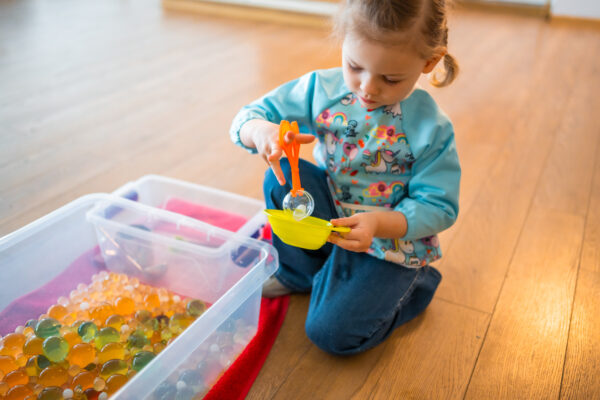
Sensory Bins
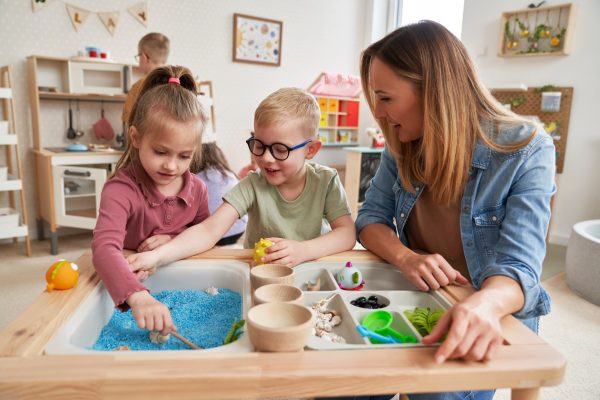
These are containers filled with materials children can explore with their hands. They offer concentrated sensory experiences where kids can dig, pour, scoop, and explore safely.
Best for: Home use, dedicated playtime, children who need intense sensory input, developing fine motor skills, extended sensory exploration.
Examples: Rice bins, water bead bins, sand tables, dried pasta bins, shaving cream play, cloud dough containers.
Fidget Tools
These are small, portable tools that provide sensory input anywhere. They’re less messy and more discreet than bins, perfect for situations where full sensory play isn’t practical.
Best for: School, waiting rooms, car rides, homework time, quiet activities, children who need subtle sensory input throughout the day.
Examples: Stress balls, fidget spinners, therapy putty, textured stones, squeeze toys, fidget cubes, stretchy bands, chewable necklaces.

Both types serve important purposes. Many families use bins at home and keep fidgets in backpacks, car consoles, and quiet activity bags.
When to Use These Tools for Maximum Benefit
Timing matters when you understand why sensory toys are important. Here’s when they provide the most benefit:
During transitions. Moving from one activity to another is hard for many children. A quick sensory break helps their brains switch gears. Give your child a fidget or two minutes with a sensory bin before moving to the next activity.
Before challenging situations. If you know your child struggles with certain situations (grocery shopping, doctor visits, long car rides), provide a sensory tool beforehand. This helps them start regulated instead of trying to recover after they’re already overwhelmed.
During focused work. Homework, listening to stories, or sitting through meals becomes easier with the right fidget. The sensory input helps organize their attention.
When you see early signs of dysregulation. Don’t wait for a full meltdown. When you notice your child getting wound up, offer a sensory break. Prevention is always easier than recovery.
As part of a daily sensory diet. Some children benefit from scheduled sensory activities throughout the day. Regular sensory input prevents the buildup of unmet sensory needs.
Getting Started: A Practical Approach
Once you understand why sensory toys are important, starting is simple. If you’re new to using sensory toys, begin small and observe what works:
Begin with one type of sensory bin or fidget. Don’t overwhelm yourself (or your child) with too many options at once. Try one thing for a week and see how your child responds.
Observe their reactions. Does your child immediately calm down? Do they avoid it? Do they get more wound up? Their response tells you what type of sensory input they need.
Set clear boundaries. Sensory bins stay in designated areas. Fidgets are for specific times and places. Clear rules help these tools stay effective instead of becoming just another toy.
Be consistent. Offer sensory opportunities regularly, not just during meltdowns. This helps your child learn to recognize and meet their own sensory needs before they become overwhelming.
Introduce new textures gradually. If your child is sensitive to certain sensations, don’t force it. Start with what they tolerate and slowly introduce new experiences. This builds tolerance over time.
Rotate materials. Keep sensory play activities interesting by changing what’s in bins or rotating fidget options. Novelty helps maintain engagement.
Supporting Different Sensory Profiles
Remember that sensory preferences are normal variations in how brains work. You’re not fixing something wrong; you’re providing tools that help your child function at their best.
For Sensory Seekers:
These children crave intense sensory input. They need “bigger” sensory experiences to feel satisfied.
Provide: Heavy work activities, resistive fidgets they can squeeze hard, bins with varied and intense textures, movement opportunities, chewable options if they seek oral input.
For Sensory Avoiders:
These children feel sensations more intensely and can get overwhelmed easily. They need gentler sensory experiences.
Provide: Smooth, predictable textures, tools they can use without direct contact (scoops, tools), calming fidgets, gradual exposure to new sensations, opportunities to control their sensory experiences.
For Mixed Profiles:
Many children seek some types of input while avoiding others. This is completely normal.
Provide: Variety based on their specific preferences, different tools for different needs, options that give them control over intensity.
The right match between tool and child makes all the difference. What calms one child might overstimulate another.
When to Seek Professional Support
When to Seek Professional Support
While sensory toys help many children, some need additional support. Consider talking to your pediatrician about an occupational therapy referral if:
- Sensory issues significantly interfere with daily functioning
- Your child has extreme reactions to normal sensory experiences
- They avoid entire categories of textures or activities
- Sensory challenges impact eating, dressing, or hygiene
- You’ve tried various approaches without seeing improvement
- Your child’s sensory needs are affecting family life or school participation

Occupational therapists specialize in sensory processing. We can assess your child’s specific needs and create a personalized sensory diet. Sometimes professional guidance makes a huge difference in finding what works.
The Long-Term Impact: Why Sensory Toys Are Important for Development
Using sensory toys consistently can transform daily challenges into opportunities for growth. You’re not just managing behaviors; you’re teaching your child crucial self-regulation skills.
Better emotional regulation. Children learn to recognize when they need sensory input and seek it appropriately. This skill serves them throughout life.
Improved focus and attention. When children know how to regulate their sensory needs, they can focus better on learning and relationships.
Stronger fine motor skills. Regular sensory play activities naturally build the hand strength and coordination needed for school and daily tasks.
Greater sensory tolerance. Gradual exposure through play helps children become more comfortable with varied sensory experiences.
Enhanced self-awareness. Children learn what their bodies need and how to communicate those needs. This self-knowledge is powerful.
These aren’t just childhood benefits. You’re helping your child develop lifelong self-regulation strategies.
Quick Reference: Matching Tools to Needs
If your child needs to calm down: ✓ Smooth stones or worry stones ✓ Soft, squishy stress balls ✓ Rice or water bead bins (slow, repetitive play) ✓ Therapy putty ✓ Weighted fidgets
If your child needs to focus: ✓ Small fidget cubes ✓ Stretchy bands for legs or hands ✓ Quiet, discreet fidgets ✓Textured pencil grips ✓ Chewable jewelry (if they need oral input)
If your child needs physical development: ✓ Playdough or therapy putty ✓ Tweezers and sorting activities in bins ✓Resistive toys they can squeeze ✓ Sensory bins with scooping and pouring ✓ Fine motor fidgets with small movements
If your child is sensory seeking: ✓ Bins with varied, intense textures ✓ Heavy resistive fidgets ✓ Crunchy, bumpy, or spiky sensory materials ✓ Movement-based fidgets ✓ Activities with strong sensory input
If your child is sensory sensitive: ✓ Gentle, smooth textures ✓ Tools to use instead of direct contact ✓ Predictable sensory experiences ✓ Calming, organizing activities ✓ Control over intensity
Your Questions Answered
How do I know if my child needs sensory tools or if they're just playing?
Both! The beauty of these tools is that they’re therapeutic AND fun. If your child is drawn to certain sensory toys, that’s often their body telling them what they need. Watch for patterns: does your child seek out Play-Doh when stressed? Do they calm down with certain fidgets? That’s need, not just play. However, even “just playing” with sensory materials builds important skills. This is exactly why sensory toys are important for all children.
What if my child refuses sensory activities I think would help?
Trust your child’s signals. Forced sensory experiences often backfire, especially for sensory-sensitive children. Instead, offer choices: “Would you like to use the rice bin or play with playdough?” Make sensory activities appealing by joining in yourself. Sometimes children resist because they’re unsure or overwhelmed. Start with what they do tolerate and build from there gradually.
Are expensive sensory toys better than simple DIY options?
Not necessarily. A bin of dried rice or beans provides fantastic sensory input for pennies. A simple stress ball works as well as a fancy fidget spinner. However, some commercial products are designed with specific therapeutic benefits in mind. As an OT, I recommend starting simple and adding specialized tools if needed. The best sensory tool is one your child will use, regardless of cost. What matters most is understanding why sensory toys are important for your child’s unique needs.
Moving Forward with Sensory Support
Understanding why sensory toys are important is just the beginning. The real transformation happens when you start using these tools consistently and observing what works for your unique child.
Every child is different. What works brilliantly for one might not work for another. The key is staying curious, patient, and observant. As you learn more about your child’s sensory needs, you’ll become expert at providing the right support at the right time.
Start small. Pick one sensory toy that seems like a good match for your child. Try it consistently for a week. Watch what happens. Then build from there.
You’re not just managing challenging behaviors. You’re giving your child fidget toys for children and sensory tools that support their developing brain, build essential skills, and teach them how to recognize and meet their own needs. That’s powerful stuff.
Next Steps for Your Family
Want to continue learning why sensory toys are important? Check out these companion resources:
Fidget Toys That Help Kids Focus: Complete Parent Guide – Specific guidance on selecting the right fidgets for your child’s unique needs.
How to Make Sensory Bins: Complete Guide for Parents – Step-by-step instructions for making effective sensory bins at home.
These resources provide practical, detailed guidance for implementing sensory support in your daily routine.
Why Your Child Can’t Self Regulate: The Hidden Brain Issue – Explains why some children have difficulty with impulse control.
Check out the Related Articles below for more blogs on sensory processing!
– Kendra
Download the Tantrum Tamer today and have regulation support in your pocket.
Note to Parents
This blog is for informational purposes and not medical advice. My desire is to help you do what you can to support your child’s development in a natural way. Please reach out to your child’s pediatrician if you have developmental concerns.