Watching toddlers play is one of the most rewarding parts of parenting. Those tiny imaginations are blossoming, and play is so much more than just fun. It’s essential for development! Through play, toddlers learn problem-solving, sharing, communication, and creativity.
If you’re wondering how to encourage your little one to develop healthy play habits, you’re in the right place. Building toddler play skills doesn’t require fancy toys or complicated activities. Here are 10 simple strategies that really work.
Create a Safe Space for Toddler Play Skills
A clutter-free, child-friendly play area encourages exploration. Having a space where toddlers feel safe allows them to play freely without interruption. You don’t need a fancy playroom. A cozy corner with soft flooring and access to their toys is perfect.
Pro Tip
Rotate toys every few weeks to keep things fresh and exciting without overwhelming your child.
Follow Their Lead
Toddlers learn best when they’re engaged in what interests them. Instead of directing their play, observe and follow their lead. If they start stacking blocks instead of using a toy the “right” way, go with it!
The goal is to let them explore freely and boost confidence in decision-making. This approach naturally supports their development while respecting their autonomy.
Use Open-Ended Toys to Build Toddler Play Skills
Open-ended toys allow children to use their imagination in endless ways. Think blocks, play dough, dolls, or art supplies. These toys encourage creativity and problem-solving.
A set of wooden blocks, for example, can become a house one day and a bridge the next! Open-ended toys support play development because there’s no single “correct” way to use them.
Model Social Play
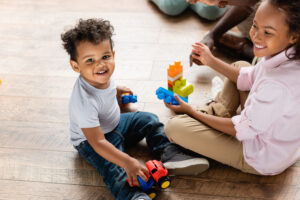
Toddlers are still learning how to engage with others. Get down on their level and model play behaviors like taking turns, sharing, and showing empathy.
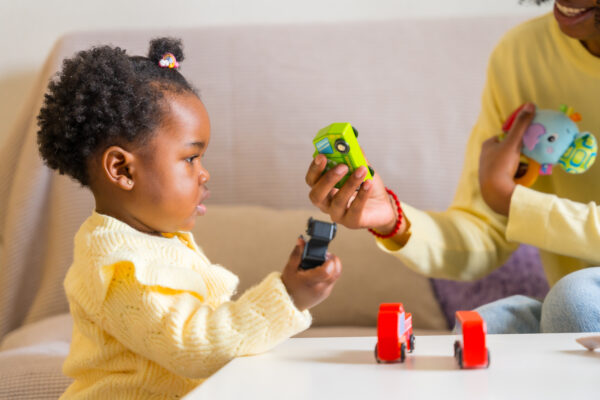
When playing together, use phrases like “My turn” and “Now it’s your turn” to teach patience and cooperation. This kind of modeling is essential for play development and social skills.
Encourage Parallel Play
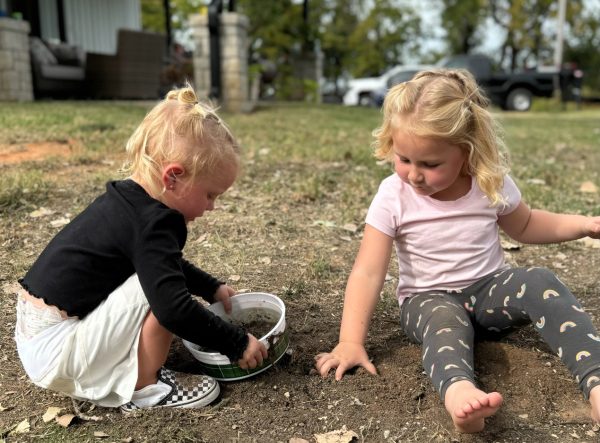
Parallel play (when toddlers play side by side without directly interacting) is an important developmental stage. It helps them learn about social cues while still engaging in their own activities. As they grow, this will naturally evolve into more interactive play.
Playdate Tip
Don’t stress if the kids don’t interact much initially. Sitting near each other with their own toys is perfectly normal at this stage.
Provide Sensory Play Opportunities
Toddlers learn about the world through their senses. Activities like water play, finger painting, or playing with sand help develop fine motor skills while engaging their curiosity. Sensory play is also a great way to support emotional regulation.
Try This
Make a sensory bin using items like rice, pasta, or pom-poms for your child to explore with their hands.
Allow Time for Independent Play
It’s important for toddlers to learn how to entertain themselves. Independent play helps develop problem-solving skills and creativity. Start with short sessions where they play independently while you’re nearby, then gradually extend the time.
Building strong play habits includes learning to play alone. This confidence will serve them well as they grow.
Use Play to Build Toddler Play Skills in Language
Playtime is the perfect opportunity to encourage language development. Describe what your child is doing as they play: “You’re building a tall tower!” This exposes them to new words and phrases in a natural way.
Pretend play, like having tea parties or acting out stories with stuffed animals, is fantastic for developing communication skills. Combining play with narration creates powerful learning moments.
Embrace Messy Play
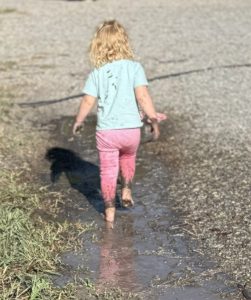
Messy play can be daunting, but it’s great for toddlers! Activities like painting, water play, or digging in the dirt foster creativity and fine motor skills. Set up a designated area for messy play and embrace the chaos. It’s worth it.
Quick Clean-Up Tip
Use washable materials and keep a towel or wet wipes nearby to make post-play cleanup easier.
Celebrate Small Wins
Remember, developing toddler play skills takes time. Every new interaction, every block stacked, and every imaginative story is a step forward. Celebrate the small milestones and be patient with their progress.
Playing alone grows gradually. Start with just a few minutes and build from there. Your child is learning something new with every play session.
You're Building Toddler Play Skills Every Day
Play is one of the best ways toddlers learn about the world around them. With a little encouragement and lots of patience, you can help nurture your child’s creativity, social skills, and independence through play.
There’s no right or wrong way to play. The key is to be present, enjoy the process, and have fun watching your little one grow and explore!
Related Resources:
For age-specific play ideas, check out Play-Based Self-Regulation Activities: Age-by-Age Play Guide.
If you’re curious how play impacts behavior, read Developmental Play Guide: Reading Your Child’s Behavior and Choosing the Right Activities.
And for outdoor play inspiration, explore Outdoor Play Benefits for Kids: Essential Nature Time Activities
– Ali
Note to Parents
This blog is for informational purposes and not medical advice. My desire is to help you do what you can to support your child’s development in a natural way. Please reach out to your child’s pediatrician if you have developmental concerns.