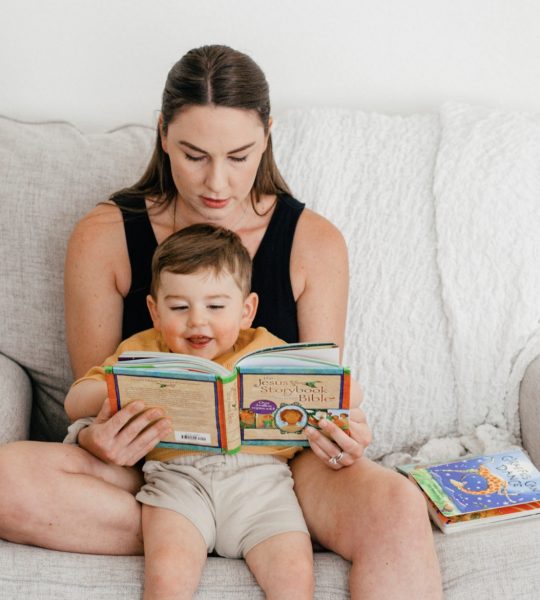
You sit down with a picture book, ready for a sweet bonding moment. Then your toddler grabs the book, flips to the last page, and tries to eat the corner. Sound familiar? Reading to toddlers doesn’t always look like the peaceful scenes in parenting magazines, and that’s completely okay.
The truth is, story time with little ones is messy, wiggly, and rarely goes according to plan. But here’s what matters: you’re building your child’s language skills and love of books with every single reading session, even the chaotic ones.
Reading to Your Toddler: 5 Tips to make story time work for real life
1. Let Your Toddler Set the Pace
Some days your child may want to linger on one page, pointing at every detail in the pictures. Other days they might flip through the whole book in thirty seconds flat. Both are completely normal.
Follow their lead and engagement level rather than forcing a particular reading speed or style. The goal isn’t finishing the book. It’s connecting with your child and exposing them to language. If they want to spend five minutes on a page with a dog, that’s five minutes of vocabulary building right there.
2. You Don't Need to Read Every Word
Here’s permission you might need: feel free to paraphrase, simplify language, or skip sections entirely. You can even just talk about the pictures without reading any text at all.
The goal is engagement and language exposure, not perfect recitation. This flexibility can help keep restless toddlers more interested and makes story time feel less like a chore for everyone. Trust your instincts about what your child needs in the moment.

3. Make Story Time Interactive
Try asking simple questions like “What do you think happens next?” or “Can you find the cat on this page?” Point to pictures and name objects. Make animal sounds together. Let your toddler turn the pages (even if they turn three at once).
This interaction helps develop critical thinking and keeps them actively engaged in the story. Interactive reading builds more language skills than passive listening, and it’s more fun for both of you. Questions also encourage your child to process and respond to what they’re seeing, which builds language skills naturally.
4. Read Favorite Books Again and Again
Your toddler wants “Goodnight Moon” for the four hundredth time? Say yes. While repetition might feel tedious to you, it’s actually powerful for learning.
Each reading helps reinforce vocabulary and lets your child notice new details in the story and illustrations. Repetition also builds confidence. When toddlers know what comes next, they feel successful and capable. This predictability supports both language growth and emotional security.
5. Bring Stories to Life
Use animated voices for different characters. Make silly facial expressions. Add hand movements and gestures. Get dramatic with the exciting parts and whisper during the quiet moments.
These simple techniques make the experience more engaging and help your toddler connect with the emotional aspects of the story. You don’t need to be a professional actor. Even small voice changes keep little ones interested and model expressive communication.
Why Toddler Story Time Matters
Every time you share a book with your child, you’re doing more than reading words on a page. You’re building vocabulary, teaching how stories work, developing listening skills, and most importantly, creating positive associations with books and learning.
Reading to toddlers doesn’t require perfection. It requires presence. So, grab a book, cuddle up, and let story time be whatever it needs to be today.
– Ali
Related Resources:
Want more ways to support your toddler’s communication? Check out How to Help Toddler Start Talking: 4 Building Blocks That Work for practical strategies.
If you’re curious whether your little one’s speech is on track, read Early Speech Concerns: Is Your Little One on Track? for guidance on what to watch for.
And for building connection beyond books, explore How to Build Secure Attachment With Your Baby (Birth – 36 months).
Note to Parents
This blog is for informational purposes and not medical advice. My desire is to help you do what you can to support your child’s development in a natural way. Please reach out to your child’s pediatrician if you have developmental concerns.