
Could a Reflex Be Behind the Meltdowns, the Fear, and the High Anxiety?
7 quick, easy, even fun animal exercises you do just 2 to 3 times a week. Colorful step-by-step pictures from a pediatric occupational therapist.
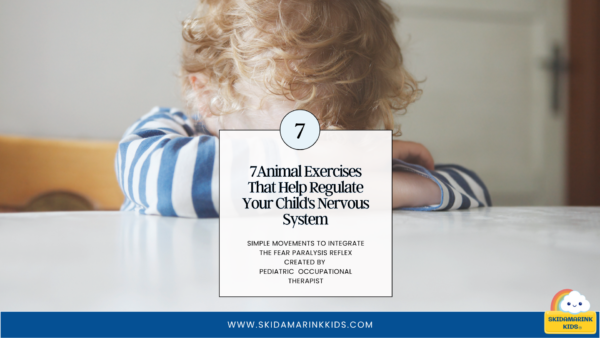
Some kids stay stuck in fear, startle at every sound, and fall apart over small things. One reflex that may be involved is the Fear Paralysis Reflex. It is one of the exercises that I recommend most for the kids I worked with, because of the difference I saw.
DOES THIS SOUND FAMILIAR?
So many families are stuck in survival mode, not because parents aren’t trying. If you’re like me, you’ve wondered:
- Fears and worries that seem bigger than the situation
- Jumps, cries, or covers their ears at sudden noises
- Falls apart during transitions or in new places
- Irritable with meltdowns that seem to come out of nowhere
- Trouble falling asleep or staying asleep
- Freezes instead of responding
- Poor balance, delays in coordination, or decreased core strength
Any one of these on its own may be nothing to worry about. When several show up together and everyday life feels like a struggle, it is worth looking deeper. Adults can feel this way too.
THE MISSING PIECE
Most advice goes straight to the behavior. More talking, more rewards, more consequences. But when a child’s alarm system is stuck on, the thinking part of the brain has a hard time coming online, so even good strategies do not stick.
The Fear Paralysis Reflex is the first reflex we develop, the body’s earliest freeze response to fear. It is meant to fade before birth. When it does not fully fade, the alarm can stay quick to fire. That can look like anxiety, startling, irritability, trouble sleeping, and big meltdowns.
I start with this reflex for a reason. It can limit how well the reflexes after it settle, so supporting it first may make everything else easier.
The behavior is the clue. The foundation is the answer.
WHAT I HAVE SEEN
- Less anxiety and fear
- Better tolerance to loud or sudden noises
- Better sleep
- Better balance and coordination
- Less irritability
- An overall calming effect
- Fewer meltdowns, including in children who are non-verbal and in kids who struggle to regulate
When a child is calmer, they can learn more, develop more, and connect more. That is how we change childhood for the next generation: one calmer child at a time.
Every child is different, and results vary. These are my observations from working with families, not a promise.
I CREATED FREE VIDEOS, AND A GUIDE TO GO WITH THEM
Why I created the guide:
After the videos, parents kept asking me for the same thing: written steps and pictures to follow while they are down on the mat with their child. So I made the guide. It is the part of my clinic routine I could not fit into a video.
WHAT IS IN THE GUIDE THAT IS NOT IN THE VIDEOS:
- Ways to test if Fear Paralysis Reflex is likely present: The Fear Paralysis Reflex has no direct test. A related reflex, the Moro reflex, can still be active when it has not integrated. The guide shows you three ways to check for it, chosen for your child’s age and abilities.
- More signs to look for
- More benefits of the exercises, even if you are not sure the reflex is involved.
- How to modify for babies and for kids who get overwhelmed
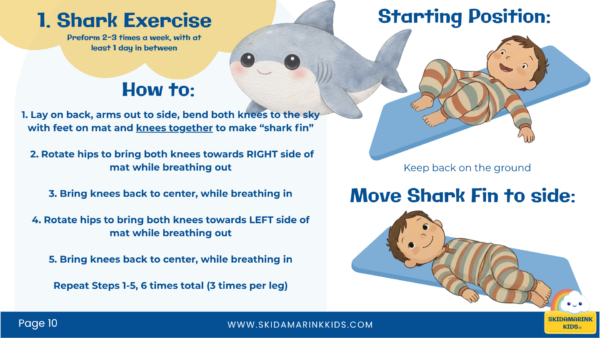
- Visual and written, together. Colorful, fun pictures with clear written steps that kids can follow along with.
Here is the links to my free videos on YouTube. Please like and subscribe to be notified of new content.
The first explains the reflex and why it matters. The second shows the exercise on a baby and a young child, along with how often and how long to do it. You can try it from the videos alone
Quick: Each round can be done in less than 5 minutes.
A few minutes, 2 to 3 times a week, for a calmer child and a calmer home.
WANT TO LEARN THE FULL FRAMEWORK?
Out of Survival Mode: Raising Regulated Kids in a Dysregulated World Course Includes:
The course includes this guide, the Fear Paralysis Reflex module, plus:
- What your child’s nervous system needs, from a Development-First approach
- The reasons both kids and parents get stuck in fear
- Calm-first parenting strategies that hold boundaries while keeping you connected
- Your own daily habits for lasting change, including faith for families who want it
- 7 modules and 6 additional downloadable guides (unlimited access, and a 30-day guarantee)
A CHILD I WILL NEVER FORGET
A 5-year-old boy came to me who did not speak. His movements were stiff and robotic. He was afraid of public restrooms because of the noises, afraid of movement and swinging, and afraid of any change. His fear had an impact on his daily life as well as his families. Along with other support, this exercise was one piece we felt made a big impact. His fear decreased significantly. He began to tolerate movement, we were able to work on his sensitivity to noise, and his coordination improved. His mom and I were amazed by his progress.
His mom, Heidi, said:
“Nobody seemed to have the knowledge and passion that you possess. People need answers that go beyond standard OT, PT and ST sessions and you’re addressing these pivotal blind spots.”
EVEN IF THE REFLEX IS NOT THE ISSUE
Whether or not your child still has this reflex, these exercises are a great way to build:
- Motor coordination
- Impulse control
- Body awareness
- A calming effect
- Crossing the midline, which supports the two sides of the brain working together
- Learning to tell the left side of the body from the right
QUESTIONS PARENTS ASK
How old does my child need to be?
I have seen babies as young as 4 months through adult’s benefit. The guide shows how to adjust.
What if my child gets overwhelmed?
The guide walks you through how to modify the exercises, such as starting with legs only and building up slowly.
How long until I see a change?
Every child is different. Reflex integration generally takes 30 to 60 days of consistent practice. I often see a temporary calm right after the exercise, so many families notice something right away.
Where do I find how often and how long to do it?
It is in the free videos and in the guide.
Do I need equipment?
No. You need a mat or soft surface and a few minutes.
WANT TO START WITH THE GUIDE?
- 7 Animal Exercises That Help Regulate Your Child’s Nervous System
- 17 pages. Colorful step-by-step pictures and written instructions
- Printable Guide with Instant download
- A coupon for the full price of this guide toward the course
Start with the guide now, and upgrade to the course later. If you decide you want the full framework, you will receive a coupon for the full price of this guide toward the course.
By purchasing, you agree to our Terms & Conditions and Privacy Policy.
A Note from Kendra
This guide and videos are for informational and educational purposes only and are not medical advice, diagnosis, or treatment. Every child is unique, and every family’s situation is different. If you have concerns about your child’s development or behavior, or if your child has been diagnosed with a condition, please speak with your pediatrician or a qualified pediatric therapist who can evaluate your child’s individual needs. Early intervention tailored to your child is always best.