
For the parent whose child is always on high alert
Settle Your Child’s Fear Response for Calmer Days
Learn about a primitive reflex that may be making stress and change so hard for your child. Then learn the simple animal exercise that helps it settle, in under 5 minutes, 2 to 3 times a week.
As a pediatric occupational therapist, I had never heard of this reflex. Now I use it with almost all of the families I work with, because of the progress I have seen. Almost no one is talking about it.
Keep reading to see if this fits your child, and to find the link to your free exercise video.
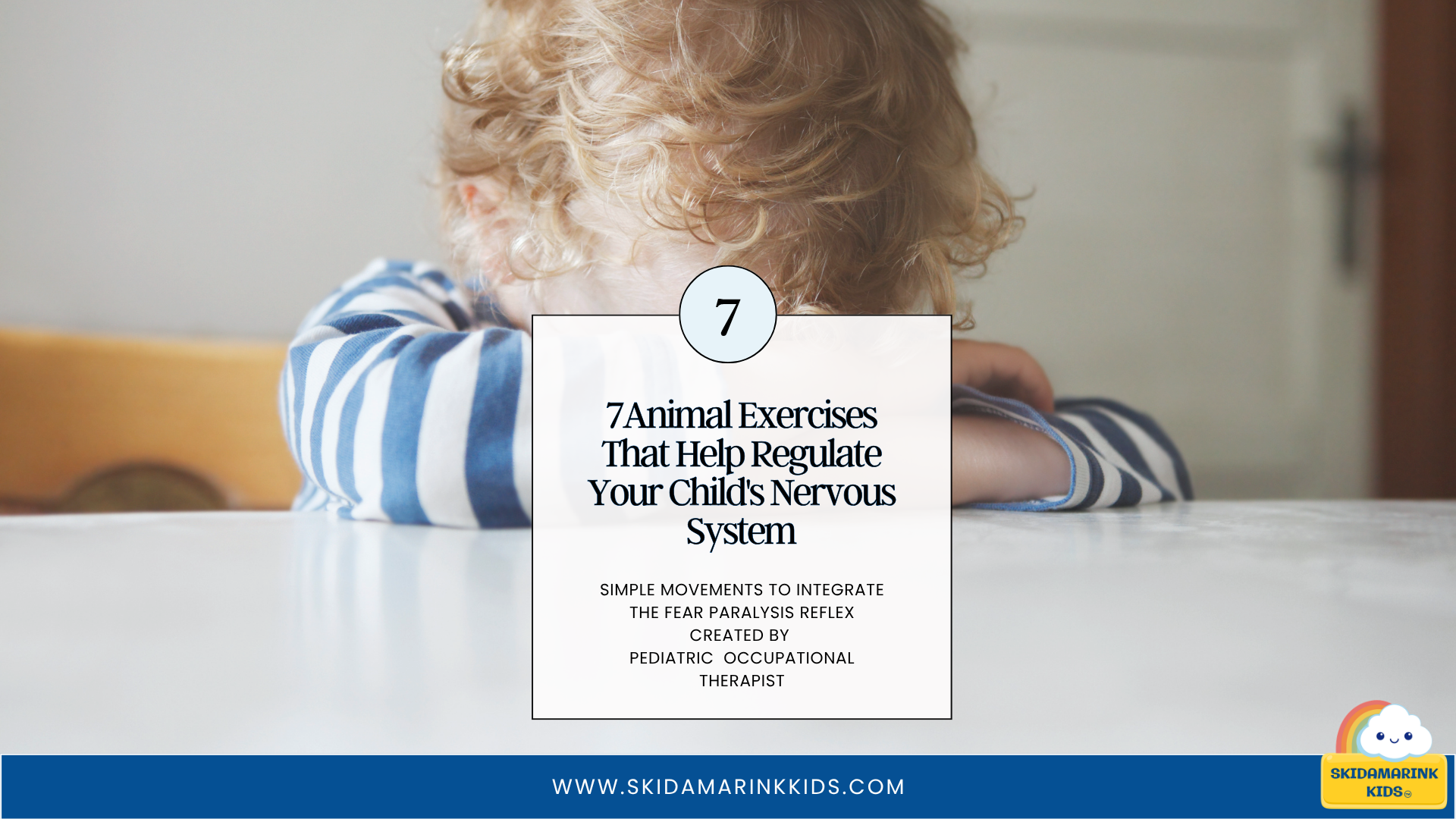
What You Will See in the Video
I walk you through the exercise from start to finish, including how I help a baby and a young child who cannot do it on their own. I am giving it to you for free because I have watched it change daily life for so many families, and I want to help every family I can.
Does This Sound Like Your Child?
A child who:
- Jumps at sudden noises, or braces for the hand dryer before you even open the bathroom door
- Has fears that seem bigger than the situation, like the swing they will not go near, or the birthday party you left early. Again.
- Falls apart at transitions, with meltdowns that seem to come out of nowhere
- Has sleep challenges, such as trouble falling asleep or staying asleep
- Freezes instead of responding, or wants everything to be perfect
- Clings to you, or has trouble separating, even for a short time
- Has weak core strength, poor balance, or trouble with motor coordination
Or a baby who:
- Is hard to settle and sleeps in short stretches
- Startles at everything
- Has trouble keeping their head steady, or muscles that feel very tight or very floppy
You do not need to check every box. Several of these together, plus a hard time with everyday life, are worth a closer look. This reflex can show up in adults too, so you may recognize a little of yourself here.
You have talked your child through it. You have said “you can do it.” You have tried pushing through, and you have tried backing off, and some days you have done both before lunch.
There may be a reason underneath this, and it may live in the nervous system. It may be a body that has not yet gotten the message that it is safe.
The Piece Most Parents Are Never Told
Talking it through, charts, rewards, and deep breaths all work when a child’s alarm is quiet. But when the alarm is already firing, the thinking part of the brain is not available, which is why “calm down” so often does not work. For many of these kids, the alarm is rarely quiet. One reason may be a reflex that never finished its job.
Babies are born with primitive reflexes, which are automatic movements that are meant to fade as the brain matures. The very first one is the Fear Paralysis Reflex, the body’s first freeze response. It is meant to fade before birth, so the rest of the nervous system can grow on top of it. When it does not fully fade, the alarm can stay quick to fire, and a child can look fearful, clingy, easily startled, irritable, or frozen. None of it is a choice they are making.
The behavior is the clue. The foundation is the answer. Most parenting books never mention it, and when there is a reason underneath, there is something we can do about it.
Why I Love This Exercise
Many children and adults feel calmer right away. But here is why I love it. This exercise helps the nervous system mature more naturally, so the change lasts. It is the body learning, from the inside, that it is safe.
Parents Asked for More, So I Created It
So many of the parents I work with watched me do this exercise and came back with the same requests. They wanted the instructions written out, with pictures they could follow along with. They wanted to know if this was really what was going on with their child. And they wanted to know what to do when it did not go smoothly.
That is why I created From Startled to Settled: Calming the Fear Reflex.
From Startled to Settled
Find out if your child may benefit. Then know exactly what to do, starting tonight.
The exercise takes less than 5 minutes. Knowing it is right for your child, and doing it well, is where most parents want help. Inside the mini course, you get:
1
3 quick checks you can do at home to see if your child may benefit, plus the signs in babies, toddlers, and older kids, with videos of me doing the checks on babies and kids
2
How to do it so it works: the order, the pauses, the breathing, and how often and how long to keep going
3
How to modify it for babies, and for children who get overwhelmed or resist
4
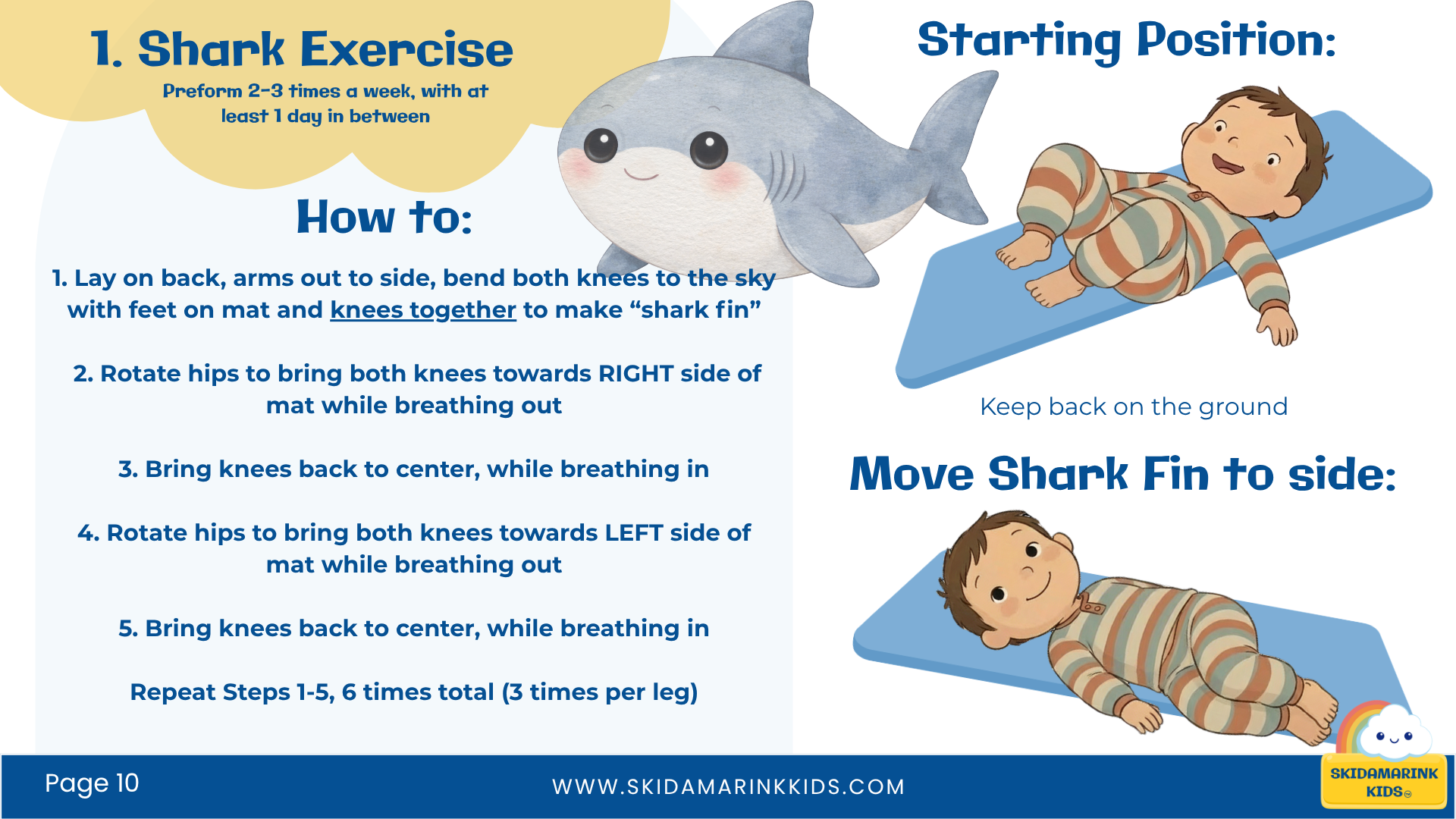
All seven animal exercises with step-by-step pictures, so you can follow along without pausing and rewinding a video, plus a reference sheet for your fridge or mat
5
The exercise video, linked right inside the course, so everything is in one place
You do not have to guess. You can start with confidence. Ready for the first steps to getting your child, and yourself, out of survival mode? Start here.
From Startled to Settled: Calming the Fear Reflex
A self-paced mini course you can start tonight.
- 3 at-home checks, with videos
- How to do it so it works, for every age
- All seven animal exercises, with pictures
- Fridge or mat reference sheet
- The exercise video, all in one place
$17
30-day money-back guarantee. If this isn’t the right fit for your family, I will refund you, no questions asked.
You have been working so hard to help your child. You do not have to figure this out alone.
By purchasing, you agree to the Terms & Conditions and Privacy Policy.
Want to see the exercise first? It is free, and no sign-up is needed.
Watch the free videoWhat This Can Change for Your Family
Imagine fewer meltdowns, easier evenings and bedtimes, and a child who can try something new without bracing for it. Imagine enjoying your child again.
I have watched this change daily life for so many families. Now you get to learn what I taught them. With steady practice, here is what many parents notice:
Every child is different, and results vary. These are my observations from working with families.
“I noticed my daughter was calmer every time we tried this exercise. We quickly saw her coordination improve. She started trying more new things, and she had fewer emotional outbursts.”
Jen, mom of a 6-year-old
A Little Boy I Will Never Forget
He was five, he was not talking yet, and he was afraid of almost everything: hand dryers, automatic toilets, anything that moved under him. His mom had stopped taking him places, because every outing ended the same way.
We started with this reflex. Over the weeks that followed, his mom told me he was startling less, sleeping better, and willing to try things he had refused for a year.
“Nobody seemed to have the knowledge and passion that you possess.”
Heidi, his mom
A Note from Kendra
My daughter had intense meltdowns from an early age. I tried everything, and I was exhausted and just surviving. Then I learned from a functional neurologist, and it changed how I saw everything I knew. I wish someone had handed me this when I was a young mom.
I created this mini course so no parent has to wonder why their child is so afraid.
This is one piece. Here is the whole picture.
Out of Survival Mode: Raising Regulated Kids in a Dysregulated World
If your days feel like survival mode, your child’s alarm and your own may be feeding each other. Calmer parents raise calmer, more capable, more confident kids. This course is the complete framework I wish someone had handed me as a young mom: how to retrain your own nervous system, help your child move from survival to self-regulation, and build a family culture of peace, with faith-based practices woven in.
The mini course is Module 6 of this course, so if you take the full course, you already have it. The full course also has a 30-day money-back guarantee.
Questions Parents Ask
What ages is this for?
Babies through adults. The free video shows how I help a baby and a preschooler. The mini course goes more in depth on how to modify the exercise for each age and tolerance level.
How long before we see change?
Many families notice a calmer stretch after a session. Lasting change usually takes 30 to 60 days of regular practice. Every child is different, and some need more time.
What if it is not the right fit?
You have 30 days. Send me a message through the contact form, and I will refund you, no questions asked.
Last Word
If you have been told your child will grow out of it, and it has not happened yet, it is worth looking underneath. There is often a reason, and there is usually something we can do about it.
30-day money-back guarantee. If this isn’t the right fit for your family, I will refund you, no questions asked.
This content is educational and is not medical advice, diagnosis, or treatment. These exercises are a supportive home tool. If you have concerns about your child’s development, talk with your pediatrician or a qualified pediatric therapist.