Your Guide to Starting Solids: Baby Feeding Development Birth to Age Two
When will my baby be ready for solids? Is it normal that she wants to feed herself already? How do I know if he’s developing the right skills? If you’ve asked yourself any of these questions, you’re in good company. Understanding baby feeding development helps you know what to expect at each stage. Every phase brings new skills, new messes, and new moments to celebrate.
Let’s walk through what’s happening so you can support your little one with confidence!
Starting Solids: Keep Feeding Your Baby Low Pressure from the Start
Food exploration in the early months is not about eating — it is about experiencing. Your baby smelling a piece of banana, touching the texture of soft sweet potato is about learning. Your baby making a face at the taste of something new is not rejection. It part of the progression of feeding development.
Every smell, every touch, every taste — even the ones that end with a wrinkled nose — is building the neurological foundation for a child who is comfortable with a wide variety of foods. Keep it playful. Keep it low pressure. Let curiosity lead.
Birth to 4 Months: The Liquid Phase

During these early months, your baby’s nutrition comes entirely from breast milk or formula. That’s exactly how it should be. Your little one is born with natural reflexes that make feeding possible from day one.
What you’ll see:
- The rooting reflex helps them turn toward touch and find the breast or bottle
- The suck-swallow reflex allows them to drink effectively
- The tongue thrust reflex protects them by pushing foreign objects out of their mouth
- The gag reflex provides additional protection against choking
How to support this stage:
Practice skin-to-skin contact during feeds to promote bonding and help regulate your baby’s body temperature. Keep their head slightly elevated during feeding for comfort and safety. Watch for hunger cues like rooting, hand-to-mouth movements, and sucking motions. Take breaks to burp your baby and prevent overfeeding.
These early feeding milestones create the foundation for everything that comes next.
Starting solids soon?
Download our FREE Baby’s First Bites Guide and learn how to confidently introduce foods while supporting healthy development from the very beginning.
4-6 Months: Signs of Readiness for Solids
Around this time, many babies show signs they’re ready for starting solids. This is an exciting shift in your baby feeding development journey!
Signs your baby may be ready:
- Good head and neck control (they can hold their head steady)
- Ability to sit with support
- Interest in watching you eat
- Decreased tongue-thrust reflex (they no longer push everything out of their mouth)

How to support this stage:
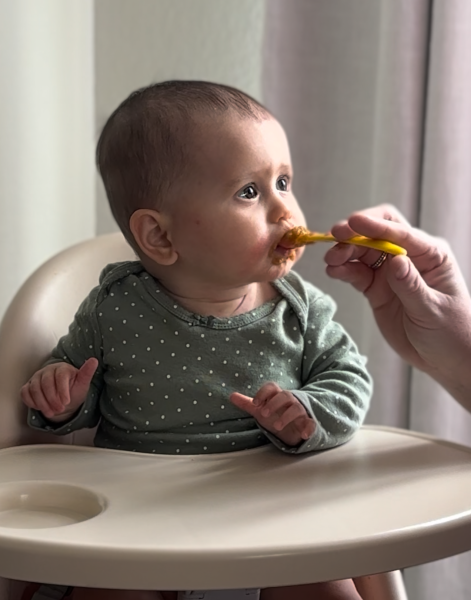
Start with iron-fortified single-grain cereals mixed with breast milk or formula. Offer purees when your baby is alert but not overly hungry. Make mealtimes fun by talking about the foods and colors you’re introducing. Use a soft-tipped spoon and begin with very small amounts.
Remember, breast milk or formula still provides most of their nutrition at this stage. Solids are about exploration and skill-building, not replacing milk feeds.
6-9 Months: Exploring
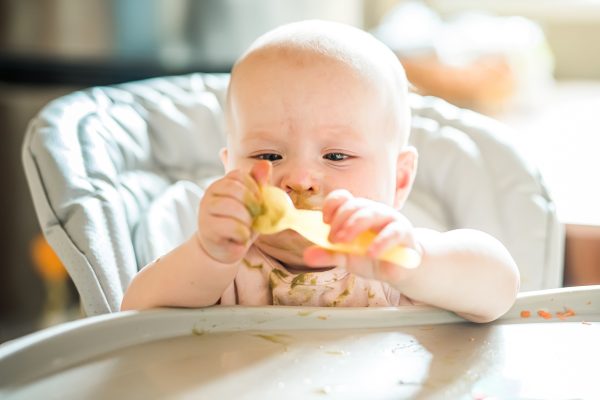
Your baby is ready to experience a wider variety of foods! This stage is all about building confidence with new flavors and learning to manage different textures.
What you’ll see:
- Interest in a wider variety of fruit and vegetable purees
- Beginning to move food from side to side in their mouth
- Development of the pincer grasp (using thumb and forefinger to pick things up)
How to support this stage:
Offer a variety of smooth purees, then gradually progress to thicker consistencies. Let your baby touch and explore foods with their hands. Introduce soft finger foods like well-cooked pasta or small pieces of soft fruits. Practice with a sippy cup using small amounts of water.
This is prime time for starting solids in earnest. Your baby’s curiosity is high, and this stage is one of the most important windows for building adventurous eating habits. Research shows it can take 10 to 20 exposures to a new food before a baby accepts it — and exposure does not only mean eating. Smelling a food, touching it, seeing it on the plate, and even making a face at the taste all count as meaningful steps toward acceptance.
A wrinkled nose at peas is not a signal to stop offering peas. It is a completely normal part of how the developing palate learns. Offer it again tomorrow. Offer it next week. Keep it low pressure and keep it fun — because the mealtime environment you create right now plays a role in whether your toddler becomes an adventurous eater or a picky one.
9-12 Months: The Self-Feeding Journey
Your self-feeding baby is emerging! This stage brings growing independence and (let’s be honest) growing messes. Both are signs of healthy development.
What you’ll see:
- Improved hand-eye coordination
- Better ability to grasp small objects
- Growing interest in feeding themselves
- Ability to drink from a cup with help
How to support this stage
Provide safe finger foods like small pieces of soft fruits, well-cooked vegetables, or toast strips. Encourage spoon use, but expect plenty of creative attempts. Offer opportunities to practice drinking from an open cup with supervision. Make mealtimes social by eating together as a family whenever possible.
Your self-feeding baby is building skills that extend far beyond the dinner table, including fine motor control, problem-solving, and confidence.
12-18 Months: The Independent Eater
Your toddler is developing more sophisticated eating skills and stronger opinions about food. Both are completely normal!
What you’ll see:
- Better control of the spoon and cup
- Ability to handle different textures more easily
- Clear food preferences emerging
- Increased interest in feeding themselves
How to support this stage:
Let them practice with child-sized utensils designed for small hands. Involve them in simple food preparation like putting pieces of bread on their plate. Introduce new foods alongside familiar favorites to reduce resistance. Create a consistent mealtime routine that helps them know what to expect.
One of the most powerful things you can do at this stage is resist the urge to react when your toddler refuses a new food. Forcing bites, bribing with dessert, or showing worry when they push something away can unintentionally signal that food is a battleground — and that signal sticks. Keep new foods on the plate without pressure. Let them touch it, smell it, and ignore it if they want to. Repeated low-pressure exposure is the foundation of an adventurous eater. Forcing or overreacting is one of the most common ways to make picky eating worse.
18-24 Months: The Family Meal Participant
Your toddler is now ready to fully participate in family meals. This is a wonderful feeding milestones moment!
What you’ll see:
- More effective use of utensils
- Ability to handle a wide variety of textures
- Clear food preferences and opinions
- Better ability to communicate hunger and fullness
How to support this stage:
Include them in basic meal preparation like stirring with supervision. Model trying new foods yourself. Practice taking turns and conversation during meals. Make mealtimes enjoyable with simple food-related games like naming colors or counting pieces.
Why Low Pressure Feeding Reduces Risk of Picky Eating and Problem Feeding
The families who struggle most with picky eating in the toddler years almost always share one thing in common — mealtimes became stressful somewhere in the first two years. It often starts small. A parent reacts with worry when a baby gags. A new food gets removed too quickly after one bad face. Pressure to eat just one more bite becomes the norm. None of these responses come from a bad place — they come from love and concern. But the nervous system does not distinguish between well-meaning pressure and any other kind. When a child’s nervous system associates mealtimes with stress, food refusal becomes a protective response — not defiance.
The single most protective thing you can do across every stage from birth to two is keep mealtimes low pressure and joyful. Let your baby lead. Follow their hunger and fullness cues. Offer variety without forcing. Celebrate exploration — touching, smelling, licking, even spitting out — as the developmental win that it is. This is not permissive parenting. This is developmentally informed feeding that protects your child’s relationship with food for life.
Important Feeding Tips for Every Stage:
No matter where your child is in their baby feeding development journey, these principles apply:
- Always supervise feeding times, especially with new foods or textures
- Watch for signs of food allergies when introducing new foods
- Maintain a positive, pressure-free feeding environment
- Follow your child’s hunger and fullness cues
- Be patient with mess and learning (it’s all part of the process)
Every child develops at their own pace. These guidelines are general, and your baby might reach milestones earlier or later. What matters most is creating a positive feeding environment that supports your child’s natural development and curiosity about food.
Trust your instincts. If you have concerns about your child’s feeding development, don’t hesitate to reach out to your pediatrician.
Related Resources:
For guidance on recognizing hunger and fullness signals, check out Baby Hunger Cues: How to Know When Baby Is Hungry or Full.
If you’re wondering whether your baby needs extra support, read Infant Feeding Struggles: Signs You Need Support (0-6 Months).
And for help with mealtime challenges as your child grows, explore When Should You Seek Help for Feeding Challenges (6-36 months)?.
– Ali
Note to Parents
This blog is for informational purposes and not medical advice. My desire is to help you do what you can to support your child’s development in a natural way. Please reach out to your child’s pediatrician if you have developmental concerns.