As parents, we’ve all been there. That moment when you say, “time to clean up” and your child completely falls apart. Moving from playtime to cleanup or from dinner to bedtime can feel like a battle every single day. The good news is that visual schedules for kids are one of the most practical tools for turning those daily transitions from battles into smooth, predictable moments everyone can get through.
I’ll be honest. This is one of the things I look back on and wish I had done for my own daughter. I hadn’t learned to organize my own day or regulate my own emotions. I realize now that my anxiety and lack of structure had a real impact on her. So many of her meltdowns were her body telling me she needed calm and predictability to feel safe. She’s in her twenties now, and we talk about the importance of habits and routines together. I share that because I want you to know it’s not too late, and starting anywhere is better than waiting until it feels perfect.
Why Visual Schedules for Kids Transform Daily Life
When children know what comes next, anxiety goes down. They feel secure, and that security builds the kind of independence we all want to see. Visual schedules also help kids develop self-regulation skills. Over time, they’re better able to handle the transitions that used to derail the whole day.
For more on the benefits of building a consistent routine, check out our companion blog “Daily Routine for Kids: Creating Structure That Supports.”
The Science Behind Visual Schedules for Kids
Research consistently shows that visual schedules for kids tap into how children’s brains naturally process information. Young children are visual learners, and these visual learning tools work with how their brains are wired. They understand pictures and symbols far more easily than abstract concepts like time, which is why one simple picture can do what five minutes of explaining cannot.
There are some key benefits that make these tools worth the setup time:
- Reduce anxiety by giving kids a clear picture of what the day looks like
- Prevent meltdowns by making expectations concrete and visible
- Build independence as children learn to move through routines on their own
- Support emotional regulation during challenging transitions
- Create security through consistent, familiar visual cues
How to Create Effective Visual Schedules: 5 Essential Elements
The basics matter a lot when it comes to making a visual schedule your child will use. A few things that help visual schedules for kids work well:
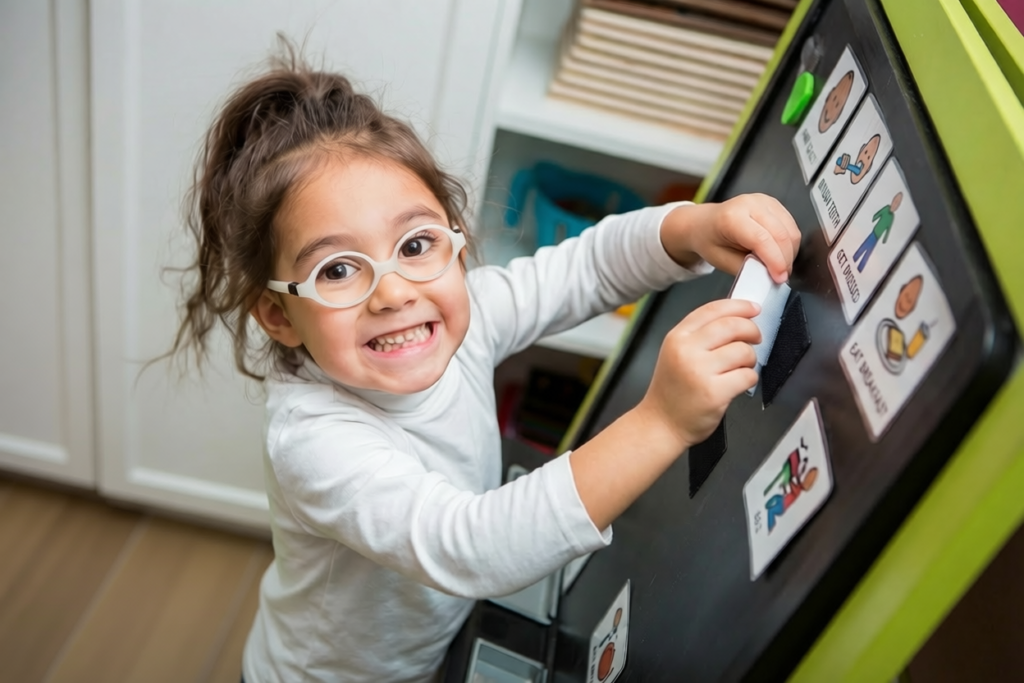
- Use pictures that match your child’s understanding level.
- Real photos work great for younger kids
- Symbols including simple drawings or printed icons work well for older ones. Pro Tip: Keep the symbols consistent across all your tools, to avoid confusion.
- Removable pieces so children can physically interact with the schedule
- Place at child-height, so they can access and check it independently
- A daily review routine that gets your child involved
- Interactive elements that let kids have some ownership over their own schedule
The more your child can touch and interact with it, the more ownership they’ll feel, and that is what makes the tool stick.
Types of Visual Schedules for Different Needs
Not all visual schedules look the same, and that’s a good thing. Basic whole-day schedules show the full lineup of activities at a glance. Photo sequences break down multi-step tasks (like the morning routine) into chunks a child can follow. Digital schedules work well paired with reward charts for families who are comfortable with technology.
First/Then boards are a favorite child routine tool, especially for toddlers. They keep it simple: complete this activity, then get to do the preferred one. Visual timers are another child routine tool that makes a real difference. Kids can see time passing rather than just being told it’s almost over. That visual representation takes so much of the stress out of daily transitions.
Calming App For Kids: Transform Chaos Into Calm
Want the First/Then board and timer built right into your phone? The Tantrum Tamer App includes transition tools as well as a daily schedule builder designed by a pediatric OT to build in the connection, sensory, and movement your child’s brain needs — so the whole day works better.
Age-Appropriate Visual Schedule Strategies
A quick note before diving into age groups: the visual schedules for kids described here are guidelines, not rules. Every child develops at their own pace. Use the age ranges as a starting point and adjust based on what you’re seeing from your child.
Visual Schedules for Toddlers (1-3 Years)
With toddlers, less is more. Their brains can only hold so much at once, and too many pictures will just cause overwhelm. Start simple and build from there.

What works well at this age:
- Basic picture schedules showing only 2-4 main activities
- Single-step directions paired with one clear image
- Concrete transition objects they can hold and carry between activities
- Short time spans that match their still-developing attention
- Physical guidance: do the schedule together rather than just pointing at it
- Simple two-choice options to build confidence
- Familiar songs paired with visual cues to make transitions feel fun
The goal at this stage isn’t independence. It’s building familiarity and trust with the routine itself.
Visual Schedules for Preschoolers (3-5 Years)
Preschoolers are ready for more. They want to feel capable, and visual schedules give them a concrete way to demonstrate that capability. This age is the sweet spot for building habits that will carry them all the way into the school years.
What works well at this stage:
- Detailed schedules showing the full day’s activities
- Two-step directions with sequential pictures
- Choices within limits using visual options
- Social stories paired with the schedule for trickier transitions
- Getting them involved in creating and updating the schedule
- Helper roles marked on the chart to give them something to be proud of
Visual Schedules for Preschoolers (3-5 Years)
School-age kids are ready to start taking real ownership. This is where you shift from using the schedule with them to helping them use it on their own. That shift doesn’t happen overnight, but these tools make it possible.
Strategies that work well:
- Written and picture combinations for kids who are starting to read
- Multi-step directions with detailed sequences
- Self-monitoring tools like simple checkoff lists
- Problem-solving built into the schedule for common snags
- Digital timers and reminder apps that appeal to kids this age
- Gradual, real independence in managing their own schedule
Smooth Transition Strategies Using Visual Schedules for Kids
Movement-Based Transitions
One of my favorite ways to use visual schedules for kids is by pairing them with movement. Kids have natural energy and channeling it during transitions makes the whole thing feel less like a battle and more like part of the routine.
Try these:
- Transition songs with hand gestures to signal what comes next
- Animal walks with pictures showing how to move to the next activity (hop like a frog to the table!)
- Follow-the-leader games where kids use visual cue cards to lead the way
- Dance moves assigned to different transitions on the schedule
- Marching to show the path from one activity to the next
Timer Integration
Timers pair naturally with visual schedules. They give kids that concrete sense of time that helps them prepare for a transition rather than being blindsided by it.
Good options to try:
- Sand timers for a visual representation of time passing
- Visual countdown timers that kids can watch decrease
- Familiar songs used as natural timers (one song = five minutes)
- Countdown systems linked directly to schedule activities
- The Tantrum Tamer App, which has built-in voice prompts and transition phrases
Communication Strategies That Enhance Visual Schedules
Clear Transition Signals
The key to making daily transitions work with a visual schedule is the warning. Kids need enough lead time to mentally shift before the physical shift happens. Here’s a tip that works well: use a silly, playful voice for transition warnings. Kids respond to that more than a neutral reminder.
Some examples that work:
- “First lunch, then park” (point to the pictures while you say it)
- “Three more turns, then we’re moving on”
- “Almost time for…” (point to what’s coming next)
- “After this, we do…” (show the sequence)
- “Two more minutes, then…” with a timer running
Calming App For Kids
Struggling with a specific transition? The Tantrum Tamer App has AI voice prompts that step in right when resistance peaks — so you don’t have to figure out what to say in the hard moment. Kids respond better to a calm voice they didn’t just argue with.
Helpful Transition Tools
Some kids need a little extra support during transitions, and that’s completely okay. Having the right objects on hand can make a big difference.
Things worth keeping nearby:
- A small favorite toy that travels between activities for comfort
- A fidget for anxious moments during harder transitions
- A special book related to the upcoming activity to make it appealing
- A calming object for the transitions that feel uncertain
- A portable activity for waiting periods when things run late
- A transitional comfort item consistently paired with certain transitions, like a lovey at bedtime
Troubleshooting Common Visual Schedule Challenges
When Kids Resist Visual Schedules
Resistance is normal when you first introduce visual schedules for kids. This is a new system, and new systems take time. Don’t give up after a rough first week.
Strategies that help:
- Let your child help plan the schedule. Ownership reduces resistance.
- Offer limited choices within the routine so they feel some control
- Put preferred activities strategically in the schedule as motivators
- Build in flexibility for the days when life happens
- Celebrate when they follow the schedule, even partially
- Adjust the schedule based on what you observe. Every child is different.
Managing Transition Difficulties
Some transitions will stay harder than others even after you’ve been using visual schedules for kids consistently. That’s not a failure. It’s just how some kids are wired. There are ways to provide extra support.
Try these:
- Break the transition into smaller visual steps if it feels overwhelming
- Add more visual cues throughout the process, not just at the start
- Give choices about how the activity happens, even when the activity itself isn’t optional
- Add movement during the transition for self-regulation
- Use First/Then boards to connect routine tasks to preferred activities
- Give more time and take a breath. Sometimes kids just need an extra minute to process.
Handling Schedule Disruptions
Life doesn’t always cooperate with the schedule, and that’s okay. The key is maintaining as much structure as you can while staying flexible about the details.
When disruptions happen:
- Give advance notice when you can, so kids can mentally prepare
- Explain the change with pictures when possible
- Show the change right on the schedule so they can see it visually
- Use a simple social story for bigger or more complex disruptions
- Maintain the key routines even when surrounding events change
- Get back to normal as quickly as you can
Seasonal Adjustments for Visual Schedules for kids
Summer Visual Schedule Modifications
Summer’s longer days and more relaxed pace mean the schedule will look different. That’s a good thing. Adjusting visual schedules for kids to fit the season keeps the system feeling fresh and relevant.
Consider:
- Earlier outdoor time with sun pictures before the heat peaks
- Water play sessions with recognizable splash symbols
- Quiet indoor activities during the hottest afternoon hours
- Extended evening activity windows that take advantage of longer days
- More flexible mealtimes with choice pictures
- Extra hydration reminders built into the schedule
Winter Visual Schedule Adaptations
Shorter days and more time inside call for a different kind of schedule. The goal is keeping kids active and engaged even when outdoor time shrinks.
Good adjustments for cold months:
- Later morning starts with cozy images that match the season’s mood
- Dedicated indoor movement time so energy has an outlet
- Shorter but still regular outdoor windows (dress warm and go!)
- Light exposure strategies to compensate for less sunshine
- Indoor sensory activities to meet physical regulation needs
Holiday and Special Event Planning
Holidays are exciting, and that excitement can completely undo a child’s sense of routine. Visual schedules become even more valuable during these times, not less.
A few transition strategies that help:
- Keep core routines visible even when the surrounding schedule is different
- Protect meal and sleep times whenever possible
- Include deliberate quiet times in busy holiday days to prevent overstimulation
- Balance exciting activities with calming ones for emotional regulation
- Have a clear return-to-normal plan ready for after festivities end
Digital Tools and Apps
Technology can make visual schedules for kids more interactive and engaging, especially for older children. Plenty of families find digital tools helpful as a complement to physical schedules.
Options worth exploring:
- Schedule apps with customizable pictures
- Timer apps with visual countdowns
- Social story apps for explaining changes
- Photo editing tools for creating custom visuals specific to your family
Creating Long-Term Success with Visual Schedules for Kids
Visual schedules for kids work best when they’re introduced slowly and built up over time. Start with one or two basic routines. Morning or bedtime are great first choices. Add more structure as your child gets comfortable with the system.
Keep the language simple, stay consistent with your cues, and offer help as often as needed without taking over. Pay attention to what works for your specific child. Every child is different, and the schedule that transforms one family’s mornings might need real adjustments for yours. That’s not failure. That’s just parenting.
You don’t have to have it all figured out before you start. A two-picture First/Then board counts. A simple bedtime sequence taped to the wall counts. Every small step toward structure is doing something real for your child’s nervous system, even when it doesn’t feel that way in the moment.
If there’s one thing I know after two decades of working with families, it’s this: the effort you’re putting into understanding your child matters more than you realize. Visual schedules give that effort a shape your child can see and hold on to.
Activities to build into You Visual Schedules for Kids Ways
Building a visual schedule for kids is important. Knowing what activities support your child’s sensory, neurological, emotional and physical needs is also important. Here are blogs to help you do just that:
Want Ways to Reduce Your Child's Tantrums?
In addition to building visual schedules for kids, there are other ways to improve transitions and improve behaviors. For practical strategies that work in the moment and long-term approaches that prevent tantrums before they start, check out these guides:
Our companion blogs offer more effective response strategies:
– Kendra
Download Tantrum Tamer: Transform Chaos Into Calm
Ready to put structure and connection together? Tantrum Tamer was built for exactly this — a routine that meets your child’s brain where it is, transition tools for the hard moments, and a reward system focused on building real internal motivation, not just compliance. Everything in one place, when you need it.
Note to Parents
This blog is for informational purposes and not medical advice. My desire is to help you do what you can to support your child’s development in a natural way. Please reach out to your child’s pediatrician if you have developmental concerns.