

You’ve probably never thought about this: the breast milk you pump at 7am is completely different from the milk you pump at midnight. Not just slightly different. Biochemically different. With different hormones that tell your baby whether it’s time to sleep or time to wake up. Most moms have no idea breast milk changes throughout day. But once you know, it changes how you think about pumping and feeding. Especially if your baby struggles with sleep.
Here’s what’s happening: your body creates different breast milk depending on the time of day. Morning milk wakes your baby up. Night milk helps them sleep. It’s not magic. It’s hormones. And if you’re pumping and storing milk, timing actually matters more than you might think.
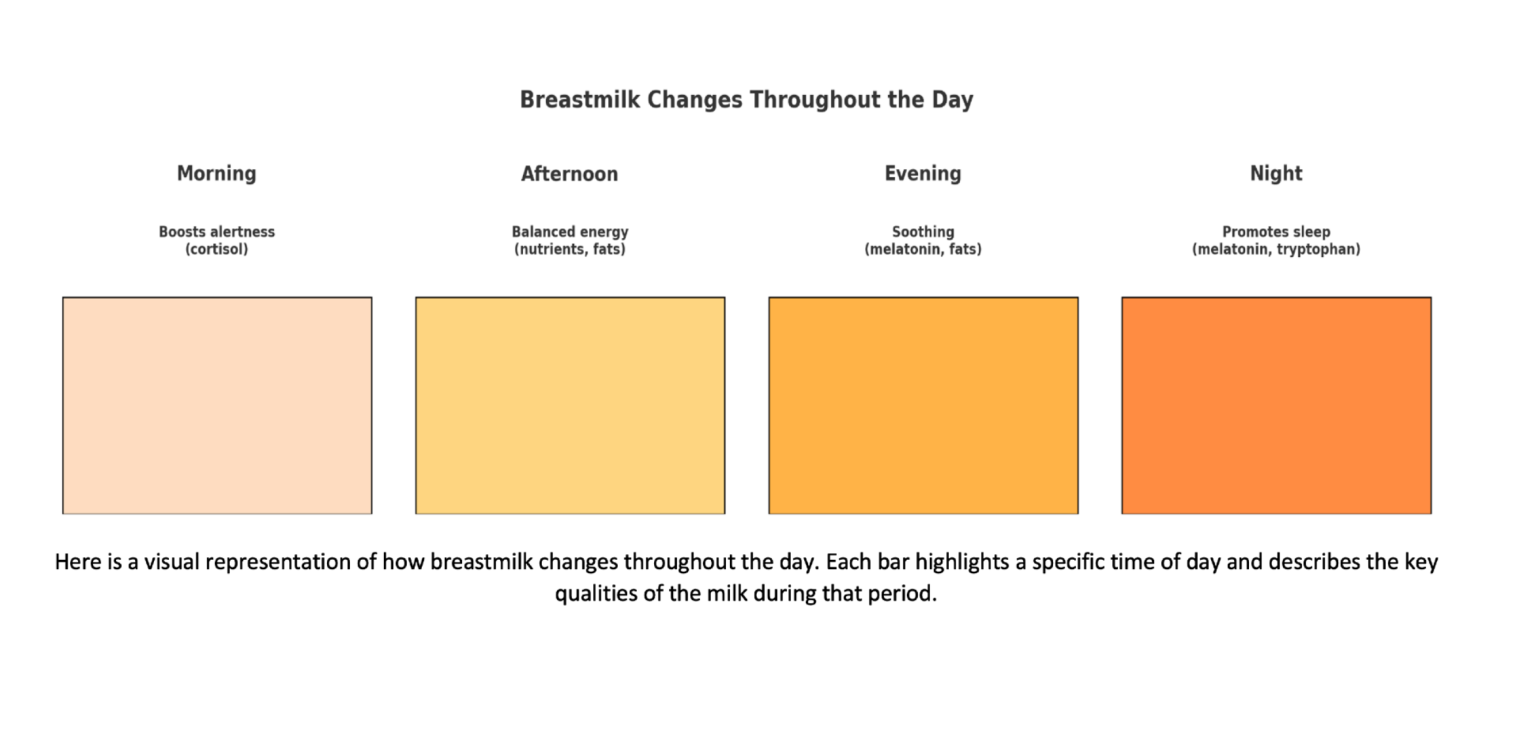
How Breast Milk Changes Throughout Day
Your body creates different breast milk depending on the time. Here’s what’s happening:
Morning milk (6am-noon):
- Higher cortisol (wake-up hormone)
- More alerting properties
- Lighter in texture
- Energy-promoting amino acids
Afternoon milk (noon-6pm):
- Balanced nutrients and fats
- Steady, sustaining composition
- Helps with longer naps
Evening milk (6pm-midnight):
- Rising melatonin (sleep hormone)
- Higher fat content (keeps baby full)
- Calming properties
- Prepares baby for sleep
Nighttime milk (midnight-6am):
- Peak melatonin levels (10x higher than daytime)
- Sleep-inducing tryptophan
- Rich in sleep-supporting hormones
- Helps regulate baby’s internal clock
This isn’t random. Your body is literally programming your baby’s sleep-wake cycle through milk.
Why Breast Milk Changes Matter for Your Baby
Your milk teaches your baby about time.
Babies don’t know if it’s day or night when they’re born. Their internal clock (circadian rhythm) is still developing. The hormones in your breast milk help them figure it out.
Morning breast milk says: “Time to be alert.”
Night breast milk says: “Time to sleep.”
When babies drink milk that matches the time of day, they get the right signals at the right time. This supports:
- Better sleep patterns
- Healthy circadian rhythm development
- Appropriate alertness during the day
- Easier settling at night

Breast Milk Changes: The Science (Super Simple Version)
Cortisol is 3-4 times higher in morning milk than evening. It helps your baby feel alert and ready for the day.
Melatonin is almost undetectable during the day but peaks around midnight. It helps your baby feel sleepy and promotes deeper sleep.
Fat content increases in evening, helping your baby feel full and satisfied before long sleep stretches.
Your body naturally does this. Every day. Without you thinking about it.
What This Means If You're Pumping
Here’s where it gets practical. If you’re pumping and storing milk, timing can matter.
The potential issue:
Feeding your baby morning milk at bedtime (with its high cortisol and low melatonin) might be like giving them an espresso before bed. Feeding nighttime milk during the day might make them drowsy when they should be alert.
The simple solution:
Label your pumped milk with the time of day you expressed it, then feed it to your baby at a similar time.
How to label:
- “Morning” (6am-noon)
- “Afternoon” (noon-6pm)
- “Evening” (6pm-midnight)
- “Night” (midnight-6am)
Or just write the actual time you pumped.
Tips for Timing Your Pumped Milk
If you're exclusively nursing:
You don’t need to do anything. Your baby is getting milk at the right time automatically. Your body’s got this.
If you're pumping at work:
Try to feed your stored morning milk in the morning, afternoon milk in the afternoon, and so on. It’s not always possible, and that’s okay. Do what you can.
If you're exclusively pumping:
Labeling pumped milk by time becomes more important since your baby won’t get any “real-time” milk with its natural timing cues.
If you're doing both:
Focus on timing for pumped milk when possible. Direct nursing will provide natural timing.
Quick Reference: What to Do
✓ Label pumped milk with time of day expressed
✓ Try to match feeding time with expression time when possible
✓ Don’t stress if you can’t – some timed milk is better than none
✓ Store nighttime milk separately if your baby struggles with sleep
✓ Use morning milk for morning feeds when you have options
✓ Trust your body – it knows what it’s doing
When This Really Helps
Time-matching milk matters most for:
- Babies who struggle with sleep
- Exclusively pumped milk feeding
- Babies whose circadian rhythm seems “off”
- Premature babies establishing rhythms
- Working moms building a freezer stash
It matters less for:
- Babies with great sleep already
- Mostly direct nursing with occasional bottles
- Babies over 6 months with established rhythms
Common Questions from Tired Moms
Do I have to do this?
No. Your baby will be fine either way. But if you’re pumping anyway and your baby struggles with sleep, it’s worth trying.
What if I mixed different times together?
It happens. Don’t worry about it. The hormones don’t cancel each other out – they just average out.
My freezer stash is all mixed up. Now what?
Use what you have. Starting to label going forward is still helpful. Don’t throw away milk.
Does this work with formula?
No. Formula doesn’t have these time-of-day hormones. That’s one unique thing about breast milk.
The Bottom Line
Breast milk changes throughout day to support your baby’s development. Morning milk helps them wake. Night milk helps them sleep. Your body is communicating time-of-day information through hormones.
If you’re pumping, labeling milk with the time you expressed it gives you the option to match feeding times with expression times. This might help with sleep and circadian rhythm development.
But here’s what matters most: you’re feeding your baby. Whether you can match times or not, whether you’re nursing or pumping, whether you have time to label or not – you’re doing great.
This is just one more tool you can use if it helps. Not one more thing to stress about.
Simple Action Steps
- If pumping: Start labeling new milk with time of day
- If possible: Feed morning milk in morning, nighttime milk at night
- If baby struggles with sleep: Try being more careful about timing
- If it feels overwhelming: Skip it – you have enough to worry about
You’re already doing the hardest work. Everything else is just details.
Want to Learn More About Feeding Your Baby?
Understanding how your breastmilk changes throughout the day is just one piece of the feeding puzzle. If you’re looking for more guidance on feeding your little one, these resources can help:
Just starting out? Our Newborn Feeding Guide: Complete Guide for Parents walks you through everything you need to know in those early weeks—from frequency to amounts to what’s normal.
Wondering if your baby is actually hungry? Learn to read your baby’s signals with our guide on Baby Hunger Cues: How to Know When Baby Is Hungry or Full. Recognizing these cues helps you respond to your baby’s needs before they reach the crying stage.
Curious about sucking patterns? Every baby has their own rhythm. Discover what’s typical in Sucking Patterns for Breast and Bottle-Fed Babies: What’s Normal? so you can feel confident your little one is feeding effectively.
Need help getting comfortable? Feeding shouldn’t hurt! Check out Comfortable Feeding Positions for Breast and Bottle Feeding to find positions that work for both you and your baby.
–Ali
Speech-Language Pathologist
Note to Parents
This blog is for informational purposes and not medical advice. My desire is to help you do what you can to support your child’s development in a natural way. Please reach out to your child’s pediatrician if you have developmental concerns.