Your child taps their pencil nonstop during homework. They touch everything they see. The teacher says they’re “always fidgeting” during class. Before you assume it’s misbehavior, consider this: your child might be showing you exactly what their body needs. Fidget Toys can help your child regulate their nervous system.
As a pediatric occupational therapist, I can tell you that fidget toys that help kids focus aren’t just trendy distractions. They’re powerful tools that provide the sensory input children crave so they can concentrate better, feel calmer, and handle emotions. Once you understand which fidgets work for your child’s unique needs, you’ll see real changes in their ability to focus, manage stress, and get through challenging situations.
What Fidget Toys Do
Before diving into choosing fidget toys, let’s talk about why they work. Fidgets aren’t toys despite what they look like. They’re practical tools that serve important developmental purposes.
What fidgets provide:
- Necessary sensory input the brain craves
- Controlled outlet for movement needs
- Help maintaining focus during required stillness
- Calming effect on overwhelmed nervous systems
- Redirection of energy into non-disruptive activity
- Support for emotional regulation during stress
- Proprioceptive input (body position awareness)
Think of it this way: some children need movement or tactile input to help their brains focus. Asking them to sit completely still actually makes concentration harder. Fidgets give their hands something to do while their brains focus on learning.
How Fidget Toys Help Kids Focus: The Science
The science behind fidget toys that help kids focus is fascinating. Here’s what’s happening in your child’s brain:
Sensory input: Fidgets provide organized, predictable sensory feedback that helps regulate the nervous system.
Arousal regulation: They can either energize an under-responsive system or calm an over-stimulated one.
Attention support: By satisfying the need for movement or tactile input, fidgets free up mental energy for learning or listening.
Anxiety reduction: Physical manipulation reduces stress hormones and provides an outlet for nervous energy.
Meltdown prevention: Tactile input calms the nervous system, making fidgets powerful tools when your child is getting overwhelmed. When big body movement isn’t available (car rides, waiting rooms, classrooms), tactile fidgets provide the regulation their body needs before a meltdown happens.
Mindfulness anchor: They bring awareness to the present moment, helping anxious minds stay grounded.
When children get the sensory input their bodies need, their brains can focus on the task at hand. It’s not magic. It’s neuroscience.
“When big body movement isn’t available, tactile fidgets provide the regulation children need before a meltdown happens.”
Understanding Your Child's Sensory Needs First
Before you start looking at the best fidget toys for kids, take time to understand what type of sensory input your child seeks or avoids. This makes all the difference between a fidget that helps and one that sits unused in a drawer.
Observe your child:
Does your child constantly touch different textures? They likely seek tactile input.
Do they chew on everything (pencils, shirt collars, fingernails)? They need oral motor input.
Are they always moving, tapping, or bouncing? They’re seeking movement and proprioceptive feedback.
Consider these factors:
- Sensory preferences: Do they seek or avoid certain textures, movements, or pressures?
- Fine motor skills: Can they manipulate small objects easily, or do they need larger tools?
- Age and safety: Are small parts a choking hazard? Does your child still mouth objects?
- Attention challenges: What situations are most difficult for focus (homework, circle time, waiting)?
- Environmental needs: Will the fidget be used at home, school, or both? Does it need to be discreet?
Understanding these patterns helps you choose fidget toys for children with your child’s specific sensory profile.
Types of Fidget Toys That Help Kids Focus
Different fidgets provide different sensory input. Understanding which type matches your child’s needs is essential.
Tactile Fidgets
These provide touch-based sensory input.
Options:
- Squeeze balls and stress balls
- Therapy putty or playdough
- Textured items (Tangles, bumpy balls)
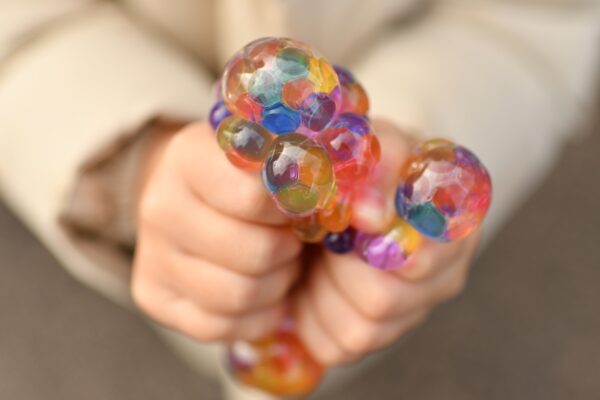
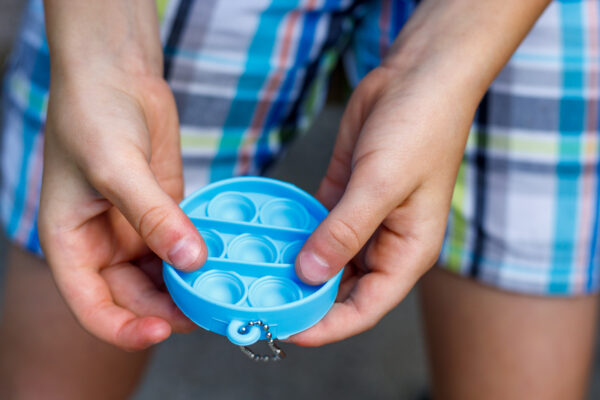
- Pop-up fidgets (silicone bubbles that pop and push)
- Silicone sensory strips
- Marble mesh fidgets
- Sand-filled squeeze toys
Benefits:
- Provide deep pressure (calming)
- Strengthen hand muscles (supports writing)
- Offer varied tactile experiences
- Ground anxious or overwhelmed children
Best for: Children who constantly touch things, need hand strengthening, or seek calming deep pressure input.
Movement-Based Fidgets
These satisfy the need for motion.
Options:
- Fidget spinners
- Twist toys (Tangle Jr.)
- Stretchy strings or coils
- Infinity cubes
- Flippy chains
- Bike chain fidgets
Benefits:
- Meet movement needs in controlled way
- Support visual tracking skills
- Keep restless hands busy
- Provide repetitive, organizing motion
Best for: Children who can’t sit still, constantly tap or bounce, or have trouble with transitions.
Oral Motor Fidgets
These address mouth-based sensory needs.
Options:
- Chewable necklaces and pendants (food-grade silicone)
- Safe chewy tubes
- Thick smoothie straws for drinking
- Chewable pencil toppers
Benefits:
- Provide safe alternative to chewing clothing or pencils
- Support jaw strength and oral motor development
- Often very calming (oral input organizes the nervous system)
- Prevent damage to clothing, school supplies, fingernails
Best for: Children who chew on everything, have oral sensory seeking behaviors, or use chewing to self-calm.
Safety note: Always choose food-grade silicone chewable fidgets designed for this purpose. Replace when showing wear.
Pressure and Proprioceptive Fidgets
These provide deep pressure and body awareness.
Options:
- Weighted lap pads
- Compression vest
- Resistance bands for chair legs
- Hand strengtheners
- Velcro strips under desks
- Heavy-resistance squeeze balls
Benefits:
- Provide calming deep pressure input
- Create body awareness
- Often have immediate calming effect
- Help anxious children feel “settled”
Best for: Children who seek crashes and bumps, need help staying in their seat, or become easily overwhelmed.
Visual Fidgets
These engage the eyes and can be very calming.
Options:
- Liquid motion toys
- Sensory bottles
- Sand timers
- Kaleidoscopes
Benefits:
- Provide visual tracking practice
- Create calming, meditative effect
- Less obtrusive in classroom settings
- Support visual processing skills
Best for: Children who are visually oriented, need calming tools, or benefit from visual focus points.
My top pick for ages 4 plus:
Color sorting fidgets (this is an example) combine tactile input, movement, AND give your child a task to focus on when they’re on the verge of a meltdown. The sorting activity redirects their attention while the manipulation calms their nervous system. Look for ones with softer colors or more blues than reds to decrease the chance of overstimulation. It’s brilliant for regulation.
Fidgets Toys in Different Settings
Where fidget toys will be used changes what you should choose.
At Home
You have more flexibility here.
Good choices:
- Larger, potentially messier options (playdough, putty)
- Noisier fidgets that might distract in classroom
- Multiple fidgets for different activities (homework vs. TV time)
- Sensory bins paired with fidgets for breaks
Tips: Incorporate fidgets into homework routines. Schedule active sensory breaks with more stimulating fidgets between focused work.
At School
This requires more strategic selection.
Good choices:
- Discreet, pocket-sized options
- Silent or near-silent fidgets
- Fidgets that can attach to desks or pencils
- Tools the teacher approves in advance
Tips: Work with teachers to find acceptable options. Provide documentation if your child has diagnosed sensory needs. Consider attaching fidgets to prevent loss. Have backup options available.
Classroom-approved favorites: Velcro under desk, pencil grips with texture, small squeeze balls, therapy putty in desk, resistance bands on chair legs.
In Public
Portability matters most.
Good choices:
- Pocket-sized fidgets
- Chewable necklaces or bracelets
- Small stretchy toys
- Fidgets that attach to backpacks or clothing
Tips: Keep backups in the car, diaper bag, or purse. Choose fidgets that don’t draw attention. Have options ready for waiting rooms, restaurants, church, or long car rides.
How to Choose the Right Fidget Toys for Sensory Needs
When selecting the best fidget toys for kids, use this decision framework:
Start with one type: Don’t overwhelm your child with 10 different fidgets. Choose one based on their primary sensory need.
Test for 3-5 days: Give the fidget a real trial period. Initial novelty wears off quickly.
Watch for patterns: Does your child naturally reach for it? Do you see improved focus? Better emotional regulation?
Add variety gradually: Once you know what type works, add 1-2 variations within that category.
Rotate options: Keep 2-3 fidgets available and rotate them to maintain interest.
Match to activity: Homework might need different fidgets than car rides or bedtime
Need more regulation support? Our Tantrum Tamer app includes calming breathing animations, a Calming Corner Designer, and brain-based sensory schedules that work alongside fidgets.Download now for complete regulation tools.
DIY Fidget Ideas
You can create effective fidgets using household items. When my daughter was little, fidgets were only available on expensive therapy sites. I had to get creative. I tied silky ribbons to a ponytail holder. She played with the ribbons in class to calm herself. To everyone else it looked like a cute hair accessory. To her it was an invaluable tool.
Simple DIY options:
Ribbon fidget bracelet: Tie 3-5 short silky ribbons to a soft hair tie or elastic bracelet. Children can run fingers along ribbons for calming tactile input. Looks like an accessory, works like a fidget.
Balloon filled with flour or rice: Provides great tactile and squeezing input. Tie securely.
Velcro strips under desk: Attach rough side under desk edge. Child can run fingers over it during seated work.
Pipe cleaners twisted together: Moldable, bendable, provides tactile and fine motor input.
Textured keychain: Add different textures (soft pom-pom, smooth bead, bumpy button) to a keyring.
Smooth stones from nature: Provide calming tactile input, can be rubbed or held.
Old clean socks filled with rice: Tie end securely for weighted, moldable fidget.
What to Know Before Using Fidget Toys
Match fidgets to sensory needs, not trends
Just because fidget spinners went viral doesn’t mean they’re right for your child. Observe what sensory input they seek, then choose accordingly.
Understand color matters for the brain
Bright colors (reds, yellows, oranges) activate the left side of the brain, which encourages movement and can increase fidgeting. Blues and purples activate the brain’s “brake pedal,” supporting impulse control and calming. Choose colors strategically based on whether your child needs calming or alerting.
Start with one, add slowly
Overwhelming children with multiple fidgets creates distraction. Start with one that matches their primary sensory need. Once that works, add variety.
Give each fidget a real trial
Some fidgets take time for children to learn to use effectively. Try each for 3-5 days before deciding it doesn’t work.
Use fidgets proactively
Fidgets work best BEFORE your child becomes dysregulated. Offer them during transitions, before challenging activities, or when you notice early signs of overwhelm. They’re tools for regulation, not punishment for behavior.
When and How to Offer Fidgets
Fidgets work best when offered proactively, not reactively.
Offer fidgets BEFORE challenging activities:
- Before homework or schoolwork
- During transitions (leaving house, getting in car)
- In waiting situations (doctor’s office, restaurant)
- When you notice early signs of dysregulation
Watch for early warning signs:
- Increased movement or restlessness
- Touching everything around them
- Difficulty following directions
- Rising frustration or anxiety
Let your child choose:
“I notice your body seems to need some input. Which fidget would help?” This teaches them to recognize their own regulation needs.
If fidgets distract others:
Switch to more discreet options (blues/purples that calm, silent fidgets, under-desk tools).
Teaching Your Child to Use Fidgets Effectively
Fidgets only work when children understand how to use them. Use a positive approach that teaches self-regulation skills, not compliance.
Frame fidgets as coping skills:
“This is a tool that helps your body feel calm and focused. You’re learning to recognize what your body needs.”
Use positive, observational language:
Instead of: “You’re acting up. You need to play with your fidget and calm down.”
Try: “I notice when you use your fidget, your body relaxes. Which one would help right now?” (offer 2 choices)
Teach body awareness:
“How does your body feel right now? Let’s try a fidget and see if it helps you feel more settled.”
Celebrate self-awareness:
“You recognized your body needed help! That’s excellent self-regulation.”
Never use as punishment:
Fidgets aren’t for “bad behavior.” They’re tools for regulation. How you word things makes all the difference in whether children see fidgets as helpful coping skills or punishment.
Practice in calm moments:
Let them explore fidgets when already regulated. This builds familiarity so they know what works when they need it.
When to Seek Professional Input
If your child has significant challenges despite trying various best fidget toys for kids, consider consulting an occupational therapist.
An OT can:
- Assess specific sensory processing needs
- Provide personalized recommendations for fidgets
- Create comprehensive sensory diet for home and school
- Offer strategies for different environments
- Provide documentation for school accommodations if needed
- Identify underlying issues that need additional support
Consider professional help if:
- Your child has extreme sensory seeking or avoiding behaviors
- Fidgets aren’t helping despite trying many types
- School is requesting evaluation or documentation
- You suspect sensory processing disorder, ADHD, or autism
- Your child’s fidgeting disrupts learning significantly
Understanding the Goal
Remember that fidget toys for children are tools for regulation, not cures for underlying challenges. The goal isn’t to eliminate movement or sensory seeking behaviors. The goal is to channel them in productive ways that support your child’s ability to learn, connect, and thrive.
When you choose fidgets based on your child’s unique sensory needs rather than trends or assumptions, you give them practical strategies for self-regulation that benefit them throughout life. You’re teaching them to recognize what their body needs and how to meet those needs appropriately.
Some children will always need more movement and sensory input than others. That’s not a problem to fix. It’s a difference to understand and support.
If you’re wondering why your child has these needs, read Why Your Child Can’t Self Regulate: The Hidden Brain Issue to understand the brain development foundations.
Moving Forward with Fidget Toys that help kids focus
You now understand how fidget toys that help kids focus work and how to choose the right ones for your child. Start with observation. What sensory input does your child naturally seek? Match fidgets to those patterns. Give each option a real trial. Watch for what improves focus and regulation.
The right fidgets can transform homework battles, improve classroom behavior, reduce anxiety, and help your child develop self-regulation skills they’ll use for life. But only if you choose based on their unique sensory needs, not marketing or trends.
Start simple. Observe closely. Adjust as needed. You’ve got this.
Need more regulation support? Our Tantrum Tamer app includes calming breathing animations, a Calming Corner Designer, and brain-based sensory schedules that work alongside fidgets. Download now for complete regulation tools.
Want To Learn More About Sensory Toys and Sensory Bins?
Want to understand the science behind these tools? Read Why Sensory Toys Are Important to learn how sensory tools support brain development.
Looking for more sensory support? Check out How to Make Sensory Bins for hands-on activities that complement fidgets perfectly.
Want additional resources on sensory Processing and activities to support brain balance?
Check out my blogs:
- How to Help a Child with Sensory Overload: A Parent’s Guide
- Sensory Processing Behavior: What Your Child’s Actions Are Really Telling You
Book: The Out-of-Sync Child, Third Edition: Recognizing and Coping with Sensory Processing Differences (The Out-of-Sync Child Series) by Carol Stock Kranowitz (Author), Lucy Jane Miller
- Check out the Related Articles below for more blogs on sensory processing and Self-Regulation!
– Kendra
Download the Tantrum Tamer today and have regulation support in your pocket.
Note to Parents
This blog is for informational purposes and not medical advice. My desire is to help you do what you can to support your child’s development in a natural way. Please reach out to your child’s pediatrician if you have developmental concerns.