
It’s 7:45 in the morning. Shoes need to be on in five minutes. You’ve asked three times. Your child is lying on the floor, staring at the ceiling, completely unbothered. Sound familiar? Figuring out how to get kids to cooperate is one of the most common struggles I hear from parents, and honestly, it was one of my biggest struggles with my oldest daughter too.
As a pediatric OT, I’ve seen the same patterns in families over and over. Building cooperation in children takes time, consistency, and the right framework. What I eventually figured out was that the expectations I had for my daughter didn’t match where her brain was. We tend to expect kids to stop what they’re doing and transition easily to the next thing on our list. And that’s something even adults struggle with. Think about knowing you need to get up and do the dishes but not wanting to leave the couch.
Being able to shift tasks on your own requires self-regulation, which is an advanced skill that keeps developing well into our twenties. No wonder we have so many power struggles. Those battles push kids into a fight, flight, or freeze state that shuts down the thinking part of the brain, which makes learning even harder.
The good news? There are practical strategies you can use to help kids cooperate with a lot less resistance. Understanding what works for your child’s age lays the developmental foundation for the skills they’ll need long-term. When you stop chasing control and start building connection and structure, cooperation follows.
Building Self-Discipline: The Foundation of Cooperation
Lasting cooperation starts with self-discipline, and self-discipline grows when children have clear, predictable structure to work within. When kids know what to expect, they spend less energy pushing back and more energy on doing.
A few structural foundations that make a real difference:
- Work before play as a consistent household norm
- Match responsibilities to where your child is right now so they can succeed
- Explain expectations before activities begin, not mid-meltdown
- Let natural consequences do some of the teaching
Children thrive when they can predict what comes next. Clear structure reduces the anxiety and power struggles that make it so hard to get kids to cooperate every day. The goal isn’t a perfectly obedient child. It’s a child who understands the rhythm of their world well enough to move through it with less friction.
Part of building self-discipline is giving children challenges that are just right: not so easy they’re bored, not so hard they’re overwhelmed. Break larger tasks into smaller steps they can manage on their own. Build confidence gradually through successful experiences and celebrate effort over perfection. There’s something powerful about doing something hard and succeeding. That feeling builds confidence, and confidence is the engine behind genuine cooperation.
How to Get Kids to Cooperate: Toddlers (1-3 Years)
Toddlers are wired to test limits, and that’s healthy. They’re figuring out that they’re separate people with their own will. Cooperation at this age is about building trust and routine, not demanding compliance. Expecting a two-year-old to respond like a five-year-old is a setup for frustration on both sides.
Child cooperation strategies that work well with toddlers:
- Give one-step directions they can successfully complete before adding another
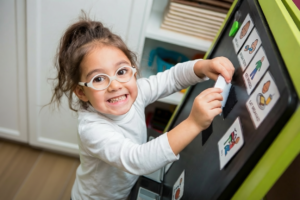
- Try pictures or visual schedules to support understanding
- Offer limited choices: “Would you like to brush teeth first or put on pajamas first?”
- Start with First/Then language while helping them complete the first task
- Set timers for transitions so they can see time passing, not just be told to stop
The goal at this age isn’t to get kids to cooperate on command. It’s building the foundation of trust and routine that makes cooperation easier with every year that follows.
Cooperation Strategies for Preschoolers (3-5 Years)
Preschoolers can handle more than we often give them credit for, and they desperately want to feel capable and helpful. This is the sweet spot for building habits and routines that will carry them through the elementary years. Preschoolers thrive on autonomy within clear boundaries.
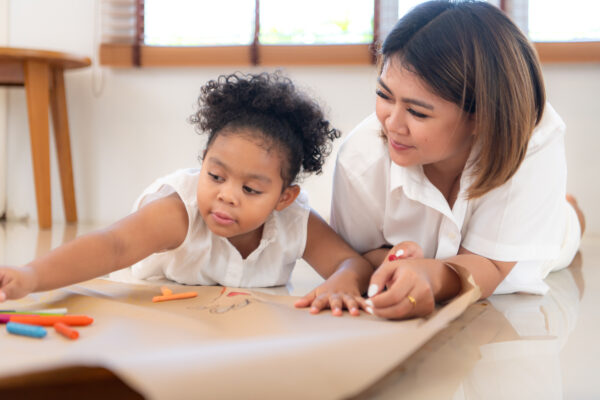
What works well at this stage:
- Offer two acceptable choices to increase their sense of control
- Create simple, predictable routines they can follow on their own
- Work up to two and three-step directions gradually
- Try First/Then and wait for them to complete the task on their own
- Praise specific efforts: “You put every single block in the right container!” lands so much better than a generic “Good job”
Preschoolers are ready to feel genuinely capable and helpful. Let them, and you’ll be surprised how naturally getting kids to cooperate starts to answer itself at this stage.
Getting Kids to Cooperate at School Age (5-7 Years)
School-age children understand cause and effect much more deeply and are ready for meaningful family responsibilities. Getting kids to cooperate at this stage is less about managing them and more about bringing them in as actual contributors to the family team. Children who feel like genuine participants cooperate far more willingly than those who only receive instructions.
Strategies that work well:
- Create responsibility charts that match their expanding capabilities
- Involve them in making family rules so they have real buy-in
- Allow natural consequences to teach important life lessons
- Teach problem-solving skills for peer and family conflicts
- Guide self-reflection about choices and their impact without shame
Children this age are ready for real conversations about why things matter. That kind of respect goes a long way. Remember that age ranges are guidelines. Start at your child’s current level and build from there. Every child develops at their own pace.
Supporting Emotional Growth to Get Kids to Cooperate
Self-regulation (your child’s ability to manage their own emotions and reactions) is at the heart of cooperation. A child who can’t manage big feelings simply cannot cooperate, no matter how clear the expectations are. This skill develops through experience, practice, and consistent support from caring adults. You can’t demand it into existence.
Kids need help managing big emotions in hard moments, support learning to calm down when overwhelmed, and space to process feelings with understanding rather than shame. Connection time matters more than most parents realize. Children whose need for connection is regularly met show less attention-seeking over time, and cooperation naturally goes up.
Creating emotional safety at home is one of the most underrated ways to get kids to cooperate consistently. Predictable routines reduce anxiety. Emotional validation, even while holding limits, builds trust. Connection before correction in challenging moments keeps the relationship strong. A child who feels emotionally safe is far more likely to cooperate than one who’s always bracing for conflict.
Principles for How to Get Kids to Cooperate Long-Term
After more than two decades working with families, a few principles consistently make the difference between cooperation that sticks and cooperation you have to fight for every single day.
Regulate yourself first. Children mirror our emotional state more than we realize. When you come in calm and regulated, cooperation is far more likely than when you show up frustrated and reactive. And yes, some days you’ll feel like you’re back at square one. That’s normal. Stay patient with the process.
A few more principles that make a real difference over time:
- Limit repeated instructions. Say it once, then follow through with help or a natural consequence. Repeating yourself trains kids to wait for the fourth request.
- Avoid bargaining during non-negotiable situations. It blurs the line between what’s flexible and what isn’t.
- Focus on connection as the basis for willing cooperation, not on power as the basis for forced compliance.
- Celebrate progress rather than demanding perfection.
Effective Reward Systems for Getting Kids to Cooperate
Reward systems get a bad reputation but used correctly they’re one of the most effective child cooperation strategies out there. This is especially true for younger children who are still building their inner drive. The key is using them as a bridge, not a permanent fix. Before introducing a reward system, I encourage parents to first build connection time and make sure their child can follow a basic First/Then routine. Rewards work best when the relationship is already solid and you’ve had some early wins helping get kids to cooperate through routine and connection first.
Sticker charts work well for toddlers and preschoolers because they make progress visible and immediate. Token systems that build toward a larger goal work well for school-age kids who can hold a longer-term reward in mind. Special privileges earned through consistent cooperation can be powerful at any age. But honestly? The most powerful reward for most kids isn’t a sticker or a privilege. It’s quality one-on-one time with you. Positive attention is what they’re after.
A few principles that make reward systems work:
- Keep the system simple enough that your child can track it themselves
- Never take away a reward once it’s been earned
- Celebrate small wins along the way
- Stay consistent with follow-through
- Make the process feel fun, not punitive
The goal over time is to gradually fade external rewards as cooperation becomes more natural. Positive discipline strategies like these are meant to build inner drive, not replace it.
Managing Screen Time to Support Cooperation
Screen time is one of the biggest sources of cooperation breakdown I see in families. Not because screens are inherently bad, but because transitions away from screens are genuinely hard for a child’s nervous system. When parents ask how to get kids to cooperate after screen time, the answer almost always starts with better limits and earlier warnings, not harder consequences.
Setting clear limits that everyone understands ahead of time removes a lot of the conflict. Give a five-minute warning before screen time ends rather than an abrupt shut-off, and you’ll notice the difference immediately. Avoiding screens before bedtime also matters. It directly supports better sleep, which affects how well your child can regulate and cooperate the next day.
If you offer alternatives to screens, make them engaging enough to compete:
- Sensory bins for independent exploration
- Building activities that develop problem-solving
- Art projects that spark creativity
- Physical play that releases energy
- Reading together for connection
A bored child is a hard-to-cooperate-with child. Plan those alternatives ahead of time so you’re ready with something good.
Using Natural Consequences as Positive Discipline Strategies
Natural consequences are one of the most powerful positive discipline strategies available because they let real life do the teaching. The direct result of a choice lands in a way a lecture never could.
Forgetting lunch means being hungry until snack time. Not putting on a coat means feeling cold outside. Breaking a toy through rough play means it isn’t available anymore. Not finishing the morning routine means less time for something preferred or heading to school in pajamas. These aren’t punishments you’re imposing. They’re outcomes that already exist in the real world.
A few things that make natural consequences work:
- Explain them in advance so your child can make an informed choice
- Follow through calmly, without anger or lectures
- Help your child connect their choice to the outcome afterward
The most important part is the conversation after the fact. Once your child has calmed down, help them reflect without shame: what happened, what they might do differently next time, and that you believe they can handle it. That’s how you get kids to cooperate from the inside out. The goal is learning, not suffering. Your child should feel supported even when experiencing disappointment.
“When children feel valued, capable, and connected, they naturally want to contribute. That’s the foundation of real cooperation, not just compliance.”
You’re Building Something Bigger Than Behavior
Learning to get kids to cooperate is about building a relationship where cooperation is the natural outcome. It takes time, consistency, and a willingness to adjust as your child grows.
The skills your child builds through these approaches (self-discipline, consideration for others, personal responsibility, and emotional regulation) will serve them well beyond childhood. You’re not just trying to get through the morning routine. You’re doing the best you can with the information you have, and your child is doing the best they can too.
Focus on progress over perfection, connection over control, and trust that every calm, consistent response you give is building something real.
Is cooperation a daily struggle in your home? The Tantrum Tamer App gives you brain-based tools from a pediatric OT, right when you need them most. Real strategies, for real moments.
Related Resources
For more information related to meltdowns in children, check out our companion blogs: “Why Do Toddlers Have Tantrums? Development Not Defiance”, “Tantrum Triggers: What Sets Off Your Child’s Meltdowns”, “How to Handle Tantrums in Children: Calm Responses That Work”, and Preventing Child Tantrums: Proactive Strategies That Work
Helpful Resources for Managing Toddler Tantrums:
- “Easy to Love, Difficult to Discipline” by Dr. Becky Bailey – Comprehensive strategies for positive discipline
- “If I Have to Tell You One More Time” by Amy McCready – Practical solutions for common behavior challenge
– Kendra
Download Tantrum Tamer: Transform Chaos Into Calm
Turn tantrums into teaching moments with Tantrum Tamer: the calming app made for parents of toddlers and young kids. Build the neurological foundation for happy, capable, self-regulated children.
Note to Parents
This blog is for informational purposes and not medical advice. My desire is to help you do what you can to support your child’s development in a natural way. Please reach out to your child’s pediatrician if you have developmental concerns.
Help us transform childhoods, one share at a time!
Transform Chaos Into Calm. Build the Neurological Foundation for Happy, Capable, Self-Regulated Kids.
Wondering if your child is getting what they need for healthy brain development The Tantrum Tamer App takes a brain balance approach—helping you support the neurological foundations your child needs to thrive.
How Tantrum Tamer supports whole-brain development:
- Parent Support & Education – Understand how modern environments often fail to provide adequate sensory experiences and movement. Learn brain-based strategies that support natural development—not just behavior modification.
- Proactive Daily Planning – Use the scheduler to ensure your child gets the movement, sensory input, and connection time their developing brain needs throughout the day
- Right-Brain to Left-Brain Development – Tools that help regulate emotions (right brain) before expecting compliance and learning (left brain). Meet your child where they are developmentally.
- Reflex Exercise Videos – Access simple exercises that integrate primitive reflexes, improving mood, regulation, and developmental readiness
- Building Real Skills – Helper Hero system and transition tools build independence and self-regulation through repetition and success—creating lasting neurological pathways, not just temporary behavior change
The difference? Most apps focus on managing behavior. Tantrum Tamer focuses on building the brain. When you give kids what they need developmentally—movement, sensory input, emotional connection, and opportunities for independence—you’re creating the foundation for self-regulation, focus, and learning.
Download the Tantrum Tamer App today to start supporting your child’s brain balance and bringing more calm to your home.